Here’s just how far proving an offensive remark wrong can take you
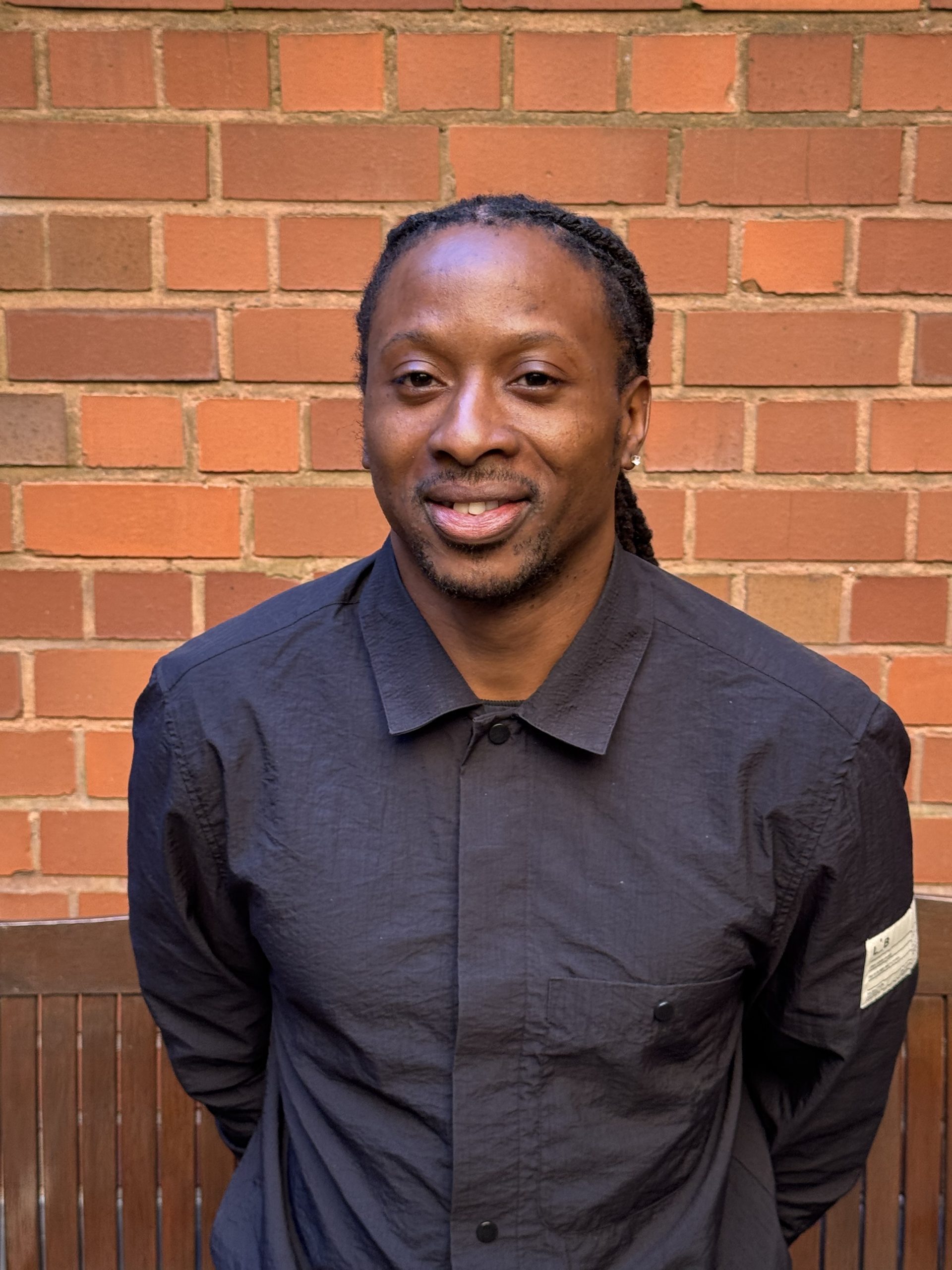
Every one of us is capable of change. It is fundamental to human nature. Where it varies between us is how, why and when that determination to change our lives comes about. As our graduate Kieron Bryan describes in this reflection, prompted by a recent visit back to prison as one of our Longford Trust ambassadors, where he was promoting our educational programme to others sitting in the selfsame place that he once occupied.
When I was serving a 25-year prison sentence, I remember all the times I was alone in my cell, eager to get back on the streets and pick up exactly where I had left off. Even though I still had years to serve – three more World Cups before my release is how I use to calculate it – I saw it as nothing more than an occupational hazard. I convinced myself that, when the time came, I would be back as if I had never been away.
Then I heard a joke on the television that changed everything. It went: ‘If you want to hide something from a black man, put it in a book’. Offensive? Of course! But rather than offending me, it challenged me. I decided that I was going to prove the joke wrong.
That single moment sparked in me an obsession with learning. Over the years that followed, I read more than 250 non-fiction books covering history, philosophy, economics, psychology, business, and science. Every book expanded my perspective, challenged my assumptions, and inspired the paradigm shifts I needed to completely change the trajectory of my life.
Charting my own paradigm shift
Here’s how it worked for me – the ‘before’ and the ‘after’.
My Starting Position (1): You can do everything on your own, asking for help is a weakness that will eventually be used against you. Me after reading bug: All the people you look up to and aspire to be like had help along the way and they are proud of this help and want to go on to help others.
My Starting position (2): academic work, books, pens, classrooms, university legit stuff is all out of my world and not meant for me. I was built for a different path (The Crud) that I have been so successful in thus far. It’s as if I was born for this shit. Me after reading bug: Degrees, certificates and qualifications are more like keys that can open doors so it doesn’t matter who’s holding them. Your past does not have to define your future.
My Starting position (3): I only have limited options in life. If I don’t make it at football, it’s the roads or a dead-end job for me. I chose the roads and it’s a lifelong decision with no way out. Me after reading bug: Many of the people I have read about began life in circumstances far worse than those I find myself in today. In many cases, they faced hardships that were not of their own making – unlike me, where I accept responsibility for my own actions.
Despite those disadvantages, they went on to achieve far more than I could ever aspire to. That led me to a simple conclusion: if they could accomplish extraordinary things from a far more difficult starting point, then surely I can make the most of the opportunities and advantages that I have available to fulfil my dreams.
The challenge I set myself
Imagine I never got the 25-year sentence and I carried on successfully hustling. What position, I asked myself, would I be in at the age of 35? Maybe lots of money cars, women and territory, years of built-up beef. But with my old mentality.
The future version of me that did not go to prison looked very weak knowing what I know now. Just another stereotype and still vulnerable to starting a 25-year sentence, getting killed by enemies or police, at best a legacy of once being an international gangster. Full stop.
I decided that I could either let my time define me or use it to put myself in a better position. I thought that, in a way, I could ‘cheat’ the sentence by ensuring that, when I was released at 35-years-old, I would be in a far better position than the version of myself who had continued living the same successful career criminal life without ever (yet) receiving a sentence.
To achieve this, I committed myself to every educational and personal development opportunity available in prison. I completed technical courses in painting and decorating, qualified as a computer technician through Cisco, and studied subjects ranging from art to philosophy. Once I had exhausted all the opportunities available internally, I reached beyond the prison system and enrolled with the Open University.
I earned a first-class degree in business, organised motivational events, invited charities into the prison, delivered speeches, and developed programmes that encouraged others to use their time constructively. I also taught myself Forex Trading, studied every book on Blockchain that was available before 2021, and wrote a children’s book that teaches chess. I later became the first author in the world to sell the book’s characters as NFTs.
And once I was out…
Since my release, I have completed a Masters in Innovation Management and Entrepreneurship with Merit and have been invited to deliver keynote speeches: at prestigious events hosted by universities; at corporate award ceremonies; at charity events; and in the House of Lords. Alongside this, I have built a diverse portfolio of business ventures, including a consultancy business, a record label, an events company, and a nursery business.
I have also won the Middlesex Entrepreneur Award for developing eco-technology through my Step Green project. In March of this year I began my PhD, focusing on how AI and Blockchain technology can be harnessed to tackle intellectual property infringements caused by generative AI ecosystems.
Then the Longford Trust invited me to go back inside a prison as one of its ambassadors. How do I feel about it? This last 30 months since my release has been the longest time I have been free since 2005.
For me, returning to prison is simple. It is an opportunity to share the message that I wish someone I trusted had shared with me while I was there. During my recent visit to HMP Wandsworth with Veena, the Longford Trust’s Mentoring Manager, my primary objective was to create a paradigm shift in the minds of those who, like I once was, may be reluctant to ask for help because of pride or ego.
What I really want people to understand is this: if you’ve been thinking for years, ‘if only someone had helped me with A, I wouldn’t have needed to do B, and C wouldn’t keep happening’, then you need to know that the help already exists. Whatever your ‘A’ is, there is almost always someone, somewhere, who can help. You just have to be willing to ask.
The tools that changed my life
During my reading phase in prison, I came across a book called Hardman’s Directory. To my surprise, it was an A–Z directory of charities and organisations dedicated to supporting prisoners. From that moment on, it never left my side.
I used it to access support for my Open University degree through the Longford Trust. One letter to the Longford Trust changed the course of my life. They supported me throughout my undergraduate degree, my Masters, and now my PhD—all because I asked for help once.
That is the message I want every prisoner to hear. Pride and ego can convince you that asking for help is a weakness. In reality, it can be the single decision that changes the direction of your life.
If you think you might want to embrace reading and education as a way to change your life, as Kieron did, contact Clare to find out about how the Longford Trust can help you.