Closing the Education Gap for Prisoners

Author: | 28 May 2023

Prison is often described as ‘a microcosm of society’ but that bears little resemblance to what goes on behind the walls, reports our current Longford Scholar Carolyn*, who is doing a PhD in women’s education provision in prisons. So much potential is going to waste because of the failure of prison education to provide the challenges that match the needs and hopes of prison learners.

During my induction at my first prison, like all new prisoners, I undertook initial education assessments. These are designed to provide a snapshot of ability. The prison teachers then looked at the floor while explaining to me that prison rules required me to undertake Level 2 English and Maths qualifications, despite me having been a teacher before my interaction with the criminal justice system, with a degree in English Literature, a PGCE and a Masters degree in education. My experience of education in custody was from the start characterized by frustration, inflexibility and short-sightedness.

No other accredited qualifications were available at the prison. Instead, I applied for an external course funded by the Prisoners’ Education Trust. I chose Copy Editing but, when I was transferred to a different prison, my course book was lost in the move. I was told I was unable to request new materials or take on a new course without completing the first.

Failing has no consequences

In 2021-22, Ofsted inspections were carried out in 22 prisons. Only one was deemed to be offering a decent standard of education. If similar results had been reported by the same organization for 22 schools outside the prison walls, urgent action would have been taken, new staff brought in, and ‘special measures’ imposed. In prison, such poor judgements appear to have no consequences at all.

The 2022 Ofsted report of my first prison found that the education department ‘requires improvement’ across all five of its categories. Whilst this two-word judgement captures much of my experience there, however, it does not reflect the handful of wonderful, supportive and inspiring teachers, committed to improving the attainment and prospects of their learners. If only they could be given autonomy to do their jobs, and offer basic training in any areas learners want to upskill in, real and positive change could be achieved.

The ups and downs

My second prison was at the other end of the M4.  In contrast to the first, it seemed to be an educational utopia with a much wider curriculum, including many qualifications on offer, all of which were consistently oversubscribed. I jumped at the opportunity to take the Level 2 Fitness Instructor course. And when I wasn’t in the gym, I could usually be found in the gardens doing a horticulture qualification.

When I was released from prison towards the beginning of the Covid-19 pandemic, this learning became the foundation for a lockdown project to redesign part of my parents’ garden. Both of the courses I took in that second prison also arguably benefitted my mindfulness and wellbeing but still I was left wondering to what extend they had been successful and elevating in an educational capacity.

Employed as a Teaching Assistant at the second prison, my role was to support other prison learners with the Functional Skills courses (equivalent to GCSE level in English and maths). Those who made progress took pride in their achievements, but I also noticed that some made little-to-no progress. When I asked them about it, they openly explained that they failed the exams on purpose to ensure that they could stay on the course, in a warm and dry classroom, with ready access to biscuits. If they had passed it, they said, it would have automatically resulted in being timetabled to work in the gardens or kitchens.

Gender stereotyping

Like many others in prison, I experienced the disparity that exists in the regime there between the systemic dismantling of the self and the confiscation of agency on the one hand, and the expectation that I would better myself and magically emerge rehabilitated on the other. The futility and Kafka-esque routine of prison dampens motivation and aspiration. Yet prisons are teeming with untapped potential desperate to be harnessed.

As a minute 4% of the total prison population in the UK, women often feel sidelined in a prison system that is not built for them. The education arena is no different. As an education offer, hair and beauty courses cater for a tiny proportion of the female cohort, but the reality is that women in prison want to improve their circumstances as long as there is relevant opportunity. Less gender-stereotyped courses would be enthusiastically received. Accredited and practical courses such as catering and hospitality are, to be fair, becoming increasingly more available in prisons. This is excellent progress but there is still a long way to go to meet the needs of women in prison.

What success looks like

There is potential for prisons to reduce radically the cost of reoffending (standing at £18.1 billion per year, according to published Ministry of Justice figures in 2019) across the board. At the very least what is needed is a review of the current limited education offer for women and the introduction of some intelligent changes. The availability of education at an appropriate level is paramount, as is curriculum content that will support a woman to invest in a positive future on release. Access to improved digital learning tools, and also supervised access to the internet, would help to level the playing field, especially for those taking distance learning courses.

My experience of prison education was mixed but it has given me the blueprint for my research PhD – exploring women’s experiences of, and access to, education in prison. With the support of a Longford Scholarship and mentor, I am keen to begin exploring a gender-responsive and trauma-informed approach to education in women’s prisons. This would mean that women in prison have access to education opportunities to help them elevate their circumstances and live a positive future, free from crime. This could have a significant positive impact on intergenerational offending, and hence reducing offending rates for both men and women.

 (*Scholar’s name has been changed)

If you feel you could benefit from a Longford Scholarship, or know someone who could, contact Clare Lewis for details about how to apply.




How a Die Hard movie inspired me to swap prison for university

Author: | 11 Apr 2023

Alex is serving the last final years of a long sentence at an Open prison. With a Longford Scholarship, he is studying on day-release at the University of East London. For Longford Blog he describes how education had never figured in his plans, until he was in prison watching a lousy Die Hard action film on TV.

He knew he could write something better.

When I landed in prison there were two options to get paid. One was you work in the prison – cleaner, servery, painter. The other was you attend education – maths, English, journalism, IT.

Growing up in Hackney, I had seen it all. What we were taught as teenagers was – it wasn’t cool to get a job or even go to school. The cool thing was to go to prison and get fast money.

But in prison, I picked education. It was a no-brainer for me. I tried every course that they had to offer because I have always been a believer that knowledge is power. Plus, most of the courses I would have to pay for in the real world.

A Better You

I noticed, though, that a lot of prisoners wanted to work and despised education. They were scared to do something that they had never done before, or felt had no real value in their lives.

There is a huge number of people in prison who don’t know how to read or write. That lead me to write an article for the prison magazine called ‘A Better You’. It was basically giving tips on how to better yourself in custody and have something to carry out with you into the real world so your sentence didn’t feel like a big waste of time.

My light-bulb moment

I had never known what I wanted to be, and really enjoyed in my life until one day, in prison, I was watching a film, A Good Day to Die Hard. I thought to myself, ‘what the hell? I can come up with a way better script than this’. So, I put pen to paper and got creating.

I called my friends in the acting world and they sent me scripts which helped me learn about the format. They also sent me a book called Save the Cat. It really helped me out a lot because it taught me about writing a film.

Throughout my years in prison, I used to go around to the staff and ask, ‘is it possible you will let me put on a play in prison that would be really educational and helpful to others’? But I got rejected year by year.

Passion for film

Still I had a real passion for film. Something felt different this time. I knew this was my future. So I never gave up. I kept writing and I kept asking to put on a play.

When I got to Standford Hill (a category D prison) I had a big break from writing because there was so much freedom there, I couldn’t concentrate.  The courses they had were mostly manual handling (which I tried, but I knew straight away, this wasn’t for me). Or others I have already done in other prisons.

My creativity was fading, so I told my prison offender manager to send me back to a Category C prison so I could focus on my scripts. Suddenly me and a staff member got speaking. I told him I wrote screenplays and he said, ‘great, can you pull off a play in a month in the prison?’ I told him yes, then realised I had to get actors, props, sound, staging… and write a script.

Getting the green light

I gathered a group of people for a writer’s room and then went around approaching prisoners to act. And we made something that prison and prisoners had never seen before in a prison. We have carried on putting on plays and well-known film makers and industry professionals have been coming to watch and giving the prisoners words of encouragement.

Today we have a company called F.A.T.E (film art theatre entertainment), we have performed numerous plays in the prison, we have been approached to do plays in other prisons, and we have a short film in the pipeline. We are also working on a prison series with a TV director known for a TV drama series called Noughts and Crosses, adapted from a book by Mallory Blackman.

Destined for greatness

One of our main ideas behind the company is giving back. We have planned some events to raise funds for charities that help victims of crime, the sort that help keep youth off the streets and people not to re-offend. As a fundraiser, and to remind people when they are feeling defeated to keep on target, we have developed silicone wristbands emblazoned with ‘destined for greatness’ on them. Sales of these bands will be split amongst the charities we support.

Another idea in the pipeline is working alongside the Koestler Arts Award to host an annual auction event selling prisoners’ work. The money raised would be split two ways between a victim awareness charity, and the artist’s family. It would make the artist feel proud of themselves and maybe inspire them to continue their art upon release.

My main message…

So, don’t give up when you get told NO. Use that NO as motivation to better yourself. And DON’T be scared to fail.

If you feel inspired by Alex’s story to find out about going to university, contact Clare Lewis, the Longford Trust’s scholarship manager, or write to her at Freepost, Longford Trust. You don’t need to put a stamp on it.

Not just another brick in the wall

Author: | 18 May 2022

This week prisons and the justice system have been in the news. Firstly, a joint justice inspectors’ report found recovery from the pandemic at ‘unacceptable levels in some areas’, whilst education is too often neglected. Today, MPs have called for urgent action to strengthen people’s access to high-standard education whilst in prison.

Our Director Peter Stanford, who gave evidence to the House of Commons Committee has written for Longford Blog:

There are some pressing, damaging problems that face us as a society where readily achievable solutions are hard to find, or else hotly contested.  Thankfully, that is not the case when it comes to tackling the staggeringly high number of prisoners who reoffend within 12 months of release. Depending on which figures you use, the current rate is between 40 and 60%.  We know a good part of the answer.  So the only real question is why are we not acting on that knowledge.

Today’s report, Not just another brick in the wall: why prisoners need an education to climb the ladder of opportunity, from the Select Committee on Education on prison education once again confirms that a decent, well-funded education system in our prisons has enormous potential to change lives, cut reoffending, reduce the cost to the taxpayer of prisons, and make us all safer.  But this message is nothing new or surprising.

In 2015, for example, I was a member of the panel working under Dame Sally Coates on a report on prison education. We handed Unlocking Potential, our recommendations, to the then Secretary of State for Justice, Michael Gove, in 2016 and he promised, in public, to implement them ‘without hesitation, repetition or deviation’.

Yet, as the Select Committee’s report sets out, next to nothing has happened about the vast majority of Coates recommendations. So it makes them all over again.

Will it be different this time round?  Well, I have faith that, if you say something sensible often enough, eventually someone will listen.  I therefore agreed to appear before the committee in April 2021 to offer once again the perspective of the Longford Trust from its work supporting young serving and ex-prisoners to go to university.

At the end of my session, I was asked by the committee chair, Robert Halfon, what I would most like to see change.  At the risk of repeating myself, I said supervised internet access for serving prisoners so they can benefit from all the life-changing opportunities that distance learning with providers like the Open University offers.

And the Select Committee makes that one of their main recommendations. It also backs another long-standing wish of the Longford Trust – that student loans should be available not just to serving prisoners with six years or less to go on their tariff (the so-called Six-Year-Rule), but to all who can demonstrate that higher education studies would improve their prospect of rehabilitation.

On this second point, though, a junior minister at the Department for Education is reported as having told the Select Committee that the government did not want to give student loans to prisoners, ‘who have no prospect of paying those loans back’.

Does he think that prisoners never come out, never go on to use the educational qualifications they have undertaken while inside to get well-paid jobs?   More than 80 per cent of Longford Scholarship award-holders, all of whom receive student loans, do precisely that.

Evidently not, which dampens hopes that this Select Committee report will succeed where others before have failed in focussing minds on improving prison education. But we will continue unceasingly to argue the case because we know from experience that it is unanswerable.

Education changes lives for the better, in prison as everywhere else.

photo by Dom Fou Unsplash

Turning a sentence into a degree: one scholar’s remarkable story

Author: | 9 Mar 2022

Turning a prison sentence into a university degree is what Longford scholars do. Second chances and a personal approach are at the heart of what we at Longford Trust do. A scholar is supported both financially and with a one-to-one trained mentor to help achieve their potential.  

More than 80% of scholars successfully graduate and get a degree-level job. Increasingly, scholars take advantage of Longford employability training and support. 

Applications for 2022 scholarships are open for 2022/23 academic year (see below for more). 

One scholar who joined last year has written for Longford Blog about her journey to university….

There’s plenty written about what people lose when they go to prison. We lose our homes, our jobs, our families, every bit of normality that we may have ever had. Coming to prison at the age of 19 changed everything for me. Alongside the crushing realisation that I’d lost everything, I distinctly remember thinking about something else on my first night in a prison cell – what could I possibly do with my life in a new world void of opportunity?

Fast forward to the age of 20, I was working on the induction unit. A group of fresh-faced criminology students from a local university entered the wing as part of a prison tour.

I remember that feeling – the feeling that they were just like me but were totally different. All the doors that were closed to me were wide open for them.

They asked me questions about my time in prison, eager to know what life was like in our hidden world. When they left, I couldn’t shake the realisation that I would never have that kind of opportunity again. That feeling stayed in my head for months, serving as a constant reminder that my life had finished before it had started.

A year later, I was working as a Peer Advisor in the same prison. I was asked to conduct a talk for a group of first-year criminology students in the visits hall. I was immediately reluctant as I was sick and tired of being wheeled out as a reliable performer, ready to speak highly of the prison to any visitor in a suit at the drop of a hat. Persuaded by the promise of a sausage roll and a biscuit, I gave in and delivered the talk.

For once, I was honest about prison.

Honest about the inequality and deprivation that has filled our prison system to the rafters. I was honest about the reality that prison is a profitable method for throwing away everyone that society doesn’t want to see. For every ‘proper criminal’, there are another 50 women with the type of trauma histories that could keep you awake at night for the rest of your days. New to the world of criminal justice, the group of students were blown away by my stories and the simple fact that our prison system does not work.

The head lecturer of the group approached me just as the students were leaving. He asked about my release date, insisting that I should be at university. I still had three years to serve, so he suggested that I should start university as soon as I was eligible for open conditions. There was a continuous trail of communications between myself, the university, my family and the prison. There were so many challenges from every direction, and so much red tape that I never believed it would come to fruition.

I was given my ‘open status’ (where I could leave the prison on day release for study or work) in September 2020, just one week before the start of the course.

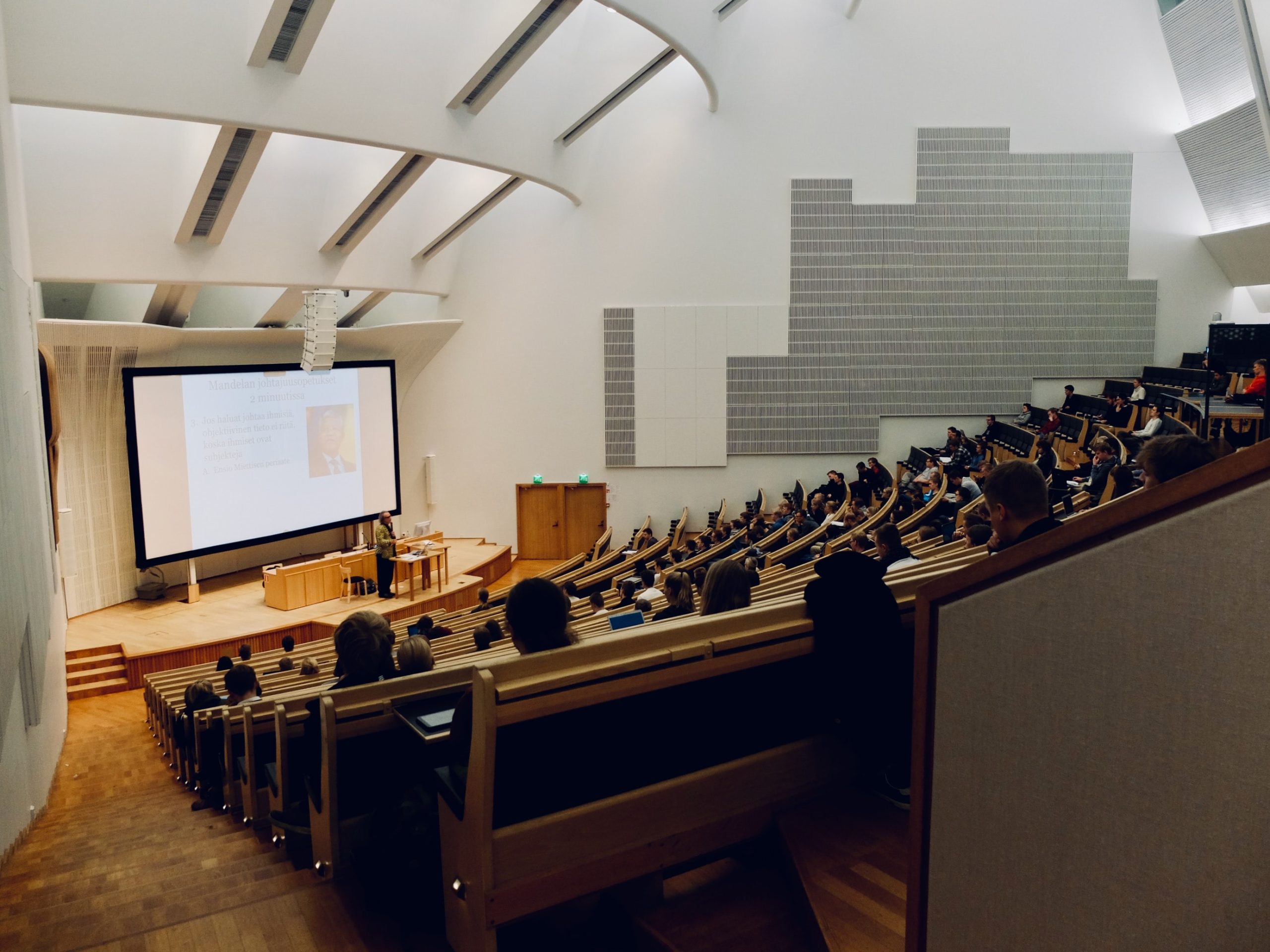
Walking into the lecture theatre for the first time….

felt just as unfamiliar and frightening as walking onto the wing for the first time. As terrifying as it was, I somehow felt like I was at home. I started to relax as soon as I realised that I wasn’t really that different from everyone else in the room.

I would learn that my experience would end up being an asset instead of holding me back.

I came across The Longford Trust whilst trying to find financial support during my first year of university. Though I was too late to apply for that year, I became a Longford scholar in my second year at university. It was incredible to know that there were other people on the same exciting journey as me. The Longford Trust partnered me with the perfect mentor. We now meet every two weeks and discuss all things criminal justice.

There have been plenty of challenges.

I often say that studying at university whilst in prison is akin to climbing Mount Everest whilst walking backwards and wearing flip flops.

Though this is the case, I’d recommend my journey to every single person in my situation. The opportunities that have been available to me since the start of my university experience are beyond what I ever thought possible. Alongside my studies and research, I work as a part-time lecturer. I am fortunate enough to be able to offer a rare insight into our world and educate prison staff about the important things that you’d never find in a textbook. To even consider what my life was like four years ago is truly unimaginable now.

I’ll end this blog with a short message of advice to every single person in prison. There are people waiting to hear your story. There are opportunities out there that are beyond the reach of the prison education department. There are people out there that are waiting to support you at every stage of your journey.

Believe in what you want to do, whatever that is, and stay tremendously interested in it.

It is only by running head-first at your passion that you’ll make your future what you want.

———————————————————————————-

Have you got plans to study a uni degree? Are you close to release or recently released? preferably in your 20s/30s, check out our 2022 application here: https://www.longfordtrust.org/scholarships/the-longford-scholarships/ 

 The closing date is 5th June 2022.


The friendship of books

Author: | 19 Jul 2021

The books which got me through.

Here for Longford Blog ex-scholar Dempsey shares his reading list of inspirational books which helped him to survive prison and remain ‘friends’ to this day.

Since books are about stories, let me first of all, briefly, tell you about me. Briefly I promise! I went to prison at 18 and came out at 57. Almost four decades behind prison walls.  Books truly were my salvation and inspiration during those years of imprisonment.

In darker moments, as I moved through the ages of man, the stories and the people in them offered not only company, but self-education and ultimately rehabilitation.

Perhaps this may be something others who’ve turned to books for for solace and escapism in the pandemic will recognise.

After my release in 2017 I was lucky enough to continue studying literature in an academic setting, thanks to the Longford Trust. So I want to share some observations of three pivotal books that stay forever with me. I hope what I have to say will strike a chord as much for those who have never stepped inside a prison as those who have been incarcerated.

One of the most influential books I read is an adventure upon the high seas titled Moby-Dick by Herman Melville.

For those unfamiliar with the story, Moby-Dick is a big, adventurous book that explores themes as profound as evil, religion, destiny, insanity, and race.  The themes are considered and examined through the eyes of Ishmael, a young man who decides to see a bit of the world by joining a whaling expedition.  Captain Ahab leads the search for a white sperm whale who bit off his leg and it is here, in Ahab’s monomaniacal desire to have his day with Moby-Dick, that the story gives rise to its major themes.  Ishmael views his time spent aboard the Pequod whaling ship as an education comparable to a tenure at Harvard or Yale, and his education grows during various incidents such as when he finds himself below deck staring into the ship’s tryworks, and after almost losing control of the ship he’s supposed to be above deck steering, Ishmael reflects: “…do not give thyself up to fire, least it invert thee, deaden thee, as for a time it did me…”   And how many times in our lives have we all, in some form or manner, become undermined by staring too long into the blast furnace of existence.

Another book I found that lessened the sting of incarceration is a classic story of adventure and misadventure that was written—perhaps by feather and ink—in 1605 by Miguel de Cervantes and famously known simply as Don Quixote.

Prison life is nothing if not tedious. Boredom is the surest companion to anyone inside. I longed for adventure, a chance to break free from my ball and chain and get out and do something, anything other than what I typically did from one dull day to the next.  I therefore found plenty of adventure and excitement through reading this book, here, in my opinion, is why.

The known world of routine corruption and commonplace disruption is what Don Quixote seeks to escape by immersing himself in books of knights in shining armour, blue moon romances and a deluxe edition of grand illusions.  With most of his mind stuck in the last book, or most of the last book stuck in his mind, Don Quixote summons his loyal servant and true friend, Sancho Panza, to accompany him on a horseback adventure across the badlands of La Mancha, Spain in search of good times, good vibrations, and goodness knows what else.  In the stratosphere of classic world literature, Don Quixote is the ultimate tale of adventure. The fact is that happiness—as we instinctively know and sometimes forget—is not an ideal of reason but of imagination.  With long reins in one hand and longer sword in the other, Don Quixote strides tall in the cowhide saddle of his bull-headed imagination to do battle with windmills and sheep and Little Bo Peep.  Sancho Panza tries to reason with the befuddled Don Quixote but to no avail.  The man of La Mancha is large and in charge.  He is, at bottom, the man of La Mancha and a man who will inspire you to straddle your horse and set your sights on grand adventure before sorrowful dementia.

I guess that for someone who has been behind walls for more than half my life, I could dare to say I’m qualified to comment on prison literature.

Of the huge number of books on prison life, fiction and nonfiction, Stephen King has to be the author who gets it most right.

Rising from the fertile imagination of Stephen King are daylight demons that twist and turn into midnight monsters who slip, slide, peep, and creep knee deep through the mist and moonbeams of your troubled dreams.  Primarily a master writer of things that thump before they bump in the night, King is just as skilful in transcending the horror genre to create ordinary stories which give way to extraordinary circumstances.  Hence Different Seasons.  A quartet of novellas as varied in tone, temperature and feel as the four seasons to which their titles correspond.

Although each tale carries the weight and disturbance of a tombstone, one story in particular rises above the others to carry the weight and resonance of thunder.  “Hope Springs Eternal: Rita Hayworth and Shawshank Redemption” is a 1940s rough-side-of-the-mountain story of the penitentiary and its brutal personalities, brutal intentions, and brutal injustices.  Longing, hope and perseverance flow through the tale as resoundingly as the midnight rumble of a distant freight train throughout moonlit cell blocks and mingling with dreams and recollections and memories of a better day, better time, better place.

“Shawshank Redemption” is memorable because at its core it is a love story.  Not sexualized romantic love, which is as fleeting and fragile as faithfulness, but genuine love which is genuine friendship, love without wings.  Two prisoners forge a perfect friendship in an imperfect place that allows each to see themselves and one another through days of desperation seemingly without end.  A genuine friendship is what lends this story a rainbow elegance while providing a subtle reminder that you can count yourself lucky if you find and keep one good friend in this world.

Prison is many things, lonely and boring among them.

Yet books became my true friends throughout my imprisonment and here in my post-prison life, still are.


Sometimes success is not where you are now

Author: | 11 Mar 2021

Every so often we receive an email which makes us stop and really think about what we do and how to measure success. Recently Hallam, an ex-scholar from 2012, got in touch out of the blue. As far as we were concerned, he’d dropped out of university and then dropped out of view. As far as the statistics go, not a success.

But maybe we should re-think how and when to measure success. Hallam explains in his own words for Longford Blog:

I was about 13-years-old when I started offending.

At 15 I was arrested as part of a police gangs operation and by 17 I was sat in a young offenders’ institute facing significant time.

I celebrated my 18th birthday in jail; I began my ‘adult life’ on 23-hour bang up on D wing of HMYOI Brinsford in Wolverhampton, eating Jamaican ginger cake as my birthday cake.

After I was released, my family moved abroad and, because of my convictions, I wasn’t allowed to move with them.

I was 19-years-old, no family, no job and no prospects for the future other than crime.

I felt like a failure.

About a year later, I decided I wanted to do something with my life and felt joining the Royal Marines was my way out. I will never forget the moment the armed forces career officer looked at my criminal record, and laughed in my face. ‘You will never, ever join the Royal Marines, it’s not for people like you, get out of my office.’

I felt ashamed, embarrassed and angry. I felt a failure.

A path to education….

However, I stuck with my determination to do ‘something’ with my life; I would return to education.

Looking back at education, my school life was a mess. Although I actually managed to leave with 5 GCSEs (don’t ask me how, because I didn’t do any work!), I was constantly in trouble inside and outside of school, always truanting and was suspended a number of times. I didn’t value education at that time.

Despite my past experience, I enrolled at college and on a night course as well. It was a tough year. I passed both courses and was offered a place at the University of Westminster in London. It was an expensive place to live and I didn’t know if I could afford to go. That’s how I came across the Longford Trust.

Feeling safe in a different world…..

I’ll never forget that first meeting. Discussing my scholarship application in a fancy coffee shop with the scholarship manager, I remember thinking, for the first time in a very long time, that I felt safe, I didn’t have to worry about seeing someone I had issues with and it ending in violence.

It was so far removed from my daily life, but I enjoyed it. It was a seed being planted.

University life in London was a different world to me.

I remember the looks on the faces of the students I lived with when I told them about my life, like the time I was shot at and felt a bullet fly past my head. They looked horrified, I had always laughed about it before.

University was the first place I had a social circle who thought it crazy to be shot at or stabbed, and not a normal part of life.

Whilst at university I applied, and was accepted into, the Royal Marines Reserves (in spite of my past interaction at the armed forces office). I trained hard and studied, my life was on a positive path. Unfortunately, during a training exercise I suffered a significant knee injury which ended my military career before it had properly started.

My dreams were crushed, I felt deflated. I finished my first year of University but never returned.

I dropped out. Again, I felt a failure.

On paper I would have been a failed statistic for the Longford Trust. I hadn’t completed the degree I started.

But how do we measure success?

There are the obvious ways; did I pass, did I drop out, did I achieve 100%? But what about the other, less obvious successes? Like gaining experience of life outside of my area, associating with people doing legal jobs with legit ambitions, broadening my view of what was possible.

Maybe a better way to measure success is to ask if a scholar was afforded the opportunity to avoid the criminal or gang life for long enough to walk away from it? The answer for me was yes.

Fast forward to today, 10 years later: At 31-years-old, I now run a successful organisation working with young people to prevent criminal exploitation. I also work in schools using my own experiences to help safeguard children. I have travelled around the world, have a house, a stable relationship and a son. I am a better person.

On top of all of that, I am back studying at university, going into my third year of a Psychology degree through the Open University.

So why the email out of the blue to the Longford Trust? For me, starting that degree in 2012 as a scholar was the catalyst for change in my life.

The experience of attending university outside of my home city, meeting people with different life experiences and seeing a future without crime were what I needed to spark a change.

I would not be where I am today without that first chance as a student.

The degree did not change my life. The opportunity to access a new life and a new area did.

If success is only measured within small timescales, what happens to those that require a longer time to grow but eventually reach great heights?

No matter where you are today, don’t measure your success against where you are now. Learn to look at life as a series of opportunities in which seeds are planted. Some will take longer to flower than others, but no seed planted is ever wasted. You never know which one will grow to be giant.

Take the opportunity, it is so much more than a degree.

Thank you to the Longford Trust for supporting me and believing in me. Even though I failed first time round, it led me to much greater heights of success.


Best decision of my life

Author: | 18 Dec 2019

The best decision of my life. 

How evolution theorist Charles Darwin helped snap one Longford scholar out of a stupor whilst incarcerated in the US. After studying at Cambridge, here he considers his life-changing decision…..

Great Meadow.

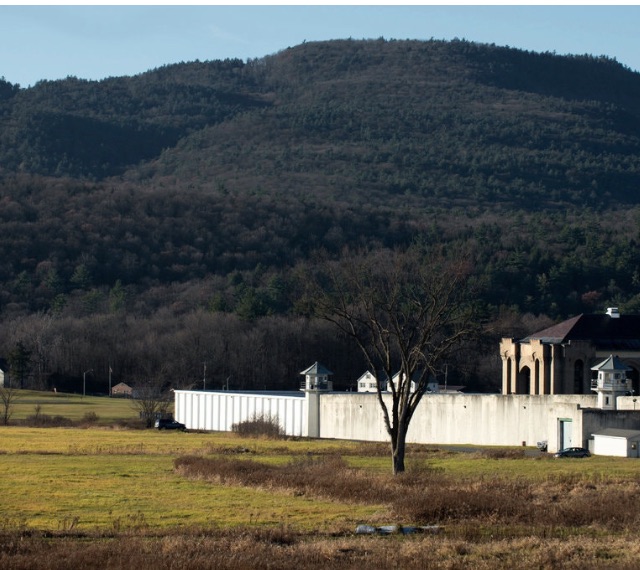
Sounds like the name of some quaint resort set among lilies and lilacs, tall trees and lush grass.  The reality is more sombre. Great Meadow belies its name. Instead it is a rough and raw maximum-security prison in upstate New York.  It was here, behind the imposing concrete walls of this prison, I made the best decision of my life, to enrol in college.

I was pushed toward my decision by a fellow inmate who walked up to me one grey morning in the equally grey and grim prison yard.  He looked at me momentarily before asking what I was doing.  I didn’t know what he meant until he clarified that I could and should be spending my time more productively, namely by enrolling in the prison’s college programme. I looked at him, then looked past him, up towards one of several guard towers overlooking the yard and its prisoners.

Before long I was in a classroom, listening to a history professor discussing Charles Darwin and the Victorian crisis of faith.

For me, as perhaps others, education is enlightenment, a recalibration of thinking, a refocus of perspective.  The ability to see oneself and the world as not just ordinary but extraordinary.

Before college, I was adrift in prison. My thinking was adrift, and limited.  I was like someone sitting in the crow’s nest of an old whale ship.  On the lookout for whales, yet unable to see anything save miles upon miles of undulating blue sea rolling over and onward towards oblivion beneath an endless expanse of blue sky.  Like the natural elements, the flow of routine days in prison can have a hypnotic effect on the mind, on one’s outlook. The tedium can render you drowsy and numb to the point where you’re unaware of this, forgetful of that.

Education snapped me out of my stupor and instilled crystal-clear awareness.

Following my release and deportation to Britain, I was relatively confident of getting a decent job.  But after two years of working in a restaurant, I’m still searching for that ever-elusive decent job.  In the interim I have attended and graduated from the Institute of Continuing Education, an adult college which is part of Cambridge University. And, while I’m still looking for a better job than the one I presently have, I’ve been uplifted and fortified by my Cambridge education. Uplifted and gratified, for although the job search is necessary, it’s not primary.  The accumulation of knowledge and wisdom is for me the only sensible goal in life.


Wasting potential

Author: | 30 Apr 2019

Wasting prisoners’ potential to change their lives through education: Dame Sally Coates reviewed prison education for the government.

Here’s her verdict for Longford Blog on the newly-introduced reforms that followed her report….

In my own education world, I often hear teachers complaining that ministers in Whitehall move too quickly in introducing reforms without allowing them time to bed in. When it comes to prisons and the Justice Department, however, the opposite seems to be the case.  “Unlocking Potential”, the independent review that I lead into prison education at the request of Michael Gove, the then Justice Secretary, was delivered in May 2016.  Three years on, some of what was recommended is finally starting to trickle down into our jails.

Despite the delay, I welcome it as good news. Too many reports on how to improve our prisons end up gathering dust on shelves in Whitehall – though I can’t help remembering that Michael Gove did promise me, at the public launch of my report, to implement it, “without hesitation, repetition or deviation”.

Governor autonomy: a vital first step

His successors may not have fully honoured that commitment, but giving prison governors autonomy over how their education budget is spent, as is now happening and as was suggested in my report, is a vital first step. Governors have to take ownership of the education that is provided in their prisons – just as, for example, they take responsibility for security – rather than see it as something handed down from Prison Service headquarters.  When I was visiting prisons for my report, I came across governors who didn’t even know which organisation was providing the education in their jail.

In schools, headteachers are held to account for the education they deliver.  That is the strongest lever we have over their performance.  Prison governors need to be subject to similar scrutiny.  Having autonomy over the education budget is the best way to introduce that.  Progress is being made at last, for which two cheers out of three.

How it will work in practice….

It is not a full three because, under the new arrangements, the contracts for delivering education in prisons have been awarded to the same four providers as previously. What I had envisaged in my report was that there would be multiple providers coming into the system.  Now there is nothing wrong with sticking to the same four, if they are all good, but if governors truly are to have autonomy, then they have to be able to change providers if they aren’t satisfied with what is being delivered in their prison.  And I am not convinced that this is going to be easy to achieve under the new system.

In theory it may be possible, but because prisons have grouped together to work with particular providers, if one governor wants to hire and fire teachers, he or she can’t act autonomously but will have to go to the education provider, who employs those teachers.  If the provider then refuses, it is far from clear what happens next, but one thing is for sure. It is not going to be straightforward. Governors have a lot of other pressing matters to cope with rather than tackling poor teaching.

Room for innovation….

There are, I must stress, positive aspects to the new governor autonomy.  The DPS – or Dynamic Purchasing System – that has been introduced will give governors a budget to let out one-year contracts to bring other education providers into the prison to run individual courses. This will incentivise trying out new approaches and increase the range of options on offer to prison learners, especially in vocational subjects that don’t always sit easily in classrooms.

What’s not included?

To see if such innovation is actually delivering, though, we have to be able to monitor and evaluate it. And for that reason I am disappointed that my recommendation that every prisoner should have an individual learning plan – that follows him or her through the system, and allows the education provided to be measured against what has been agreed – still hasn’t become routine.  It remains, I am told, an ambition.  Yet without it how can governors be held to account over whether the education they are using their budgets to provide is genuinely meeting educational needs?

And where, too, is any improvement in IT access to promote education for which I argued strongly? Yes, there are now at best a handful of prisons allowing limited digital access in cells via tablets, but rarely is it set up to be used for learning.  That is such a waste! How effective it could be in encouraging prisoners to use their time in their cell to learn, and all without officers having to be involved to escort them to the education wing or the library?

Without radical reform, prisoners’ huge potential wasted….

My core belief back in 2016 was that good, targeted education is absolutely fundamental in bringing about prisoner rehabilitation.  That is why I argued in my report for a radical overhaul of the education system in prisons. What has now been introduced, however, doesn’t sound anywhere near radical enough. And that means the huge potential of prisoners to change their lives through education is continuing to be wasted.


Peter Stanford

Introducing you to our new Longford Blog. Join a Big Conversation….

Author: | 25 Mar 2019

You get used to negative responses when you run a prison reform charity. Not always, of course, but on occasion I have had doors shut in my face when talking about the Longford Trust, what we do, and those we work with – shut metaphorically, I should add, in the sense of closed or hostile minds, rather than actually, in most cases.  The experience has been sufficient to give me some small insight into how much worse it must be when what is being shut out is not a charity but yourself, and your future. 

It happens for a whole variety of reasons, but principal among them is that the stereotypes surrounding people who’ve been to prison remain extremely hard to shift. These are stereotypes that deal in generalities rather than individuals, that play on fear rather than fact, that are informed by negative newspaper headlines and crowd-pleasing politicians rather than real people with real lives. 

At the Longford Trust, we have always been about people who have been to prison and are working really hard for a second chance. We try to understand – but not excuse – the many obstacles that stand in their way so that they can be overcome and best of all removed. By launching our new blog on the trust’s website, promoted on our Twitter feed and other social media, we want to extend that work further to give those we work with, our Longford Scholars, a platform to talk about what they are doing, how the world looks from where they are. What works, what doesn’t, and what needs to change. 

The trust’s starting point back in 2002 when we set up was a belief in the power of education to transform lives – something Frank Longford (in whose memory we were established) said throughout his long life on the political front-line, and on newspaper front pages. Over 70 years in the limelight, he also (usually quietly) visited prisoners. Frank Longford said many things but one in particular informs all we do. If you write off any individual’s capacity to reform and rehabilitate themselves, then you write off not just them, but yourself as well.  

So let’s stop doing something so damaging.  Let’s turn to this new platform for discussion about what taking on such a positive challenge means in practical terms. Let’s listen to those who know this pathway inside out, and want to support and encourage others to walk the same road. We hope to inspire those in prison or have been to prison, who might think university and a degree might not be for them, to look at others and think if it might actually be in their grasp. With the right support, could you do it? This Longford Blog offers a platform for scholars – occasionally mentors and other supporters as well- to air concerns and offer solutions about studying when you have been to prison, about ways to make the most of employment opportunities. Alongside the efforts of many others, up to and including some ministers, let’s keep pushing forward with making prison sentences a start not an end. 

If you really care about something and want to blog as part of a big conversation, please let us know. Email: office@longfordtrust.org

Peter Stanford

Director, Longford Trust