In recent years it has become increasingly common for people with personal experience of complex social issues including crime, prisons and the justice system to tell their stories publicly.
Michaela Booth, a Longford scholar with a First class honours degree is calling for a rethink….
A few years ago I was at a local radio station giving an interview about a research project I had been a participant in. After the interview I was asked by another radio producer, who said he followed me on social media, to record a separate interview with him. I agreed.
The interview wasn’t going to be aired live, so I figured (incorrectly as it turned out) that I would have a chance to re-record or edit any parts I wasn’t happy with. I remember the producer being very positive about my life, saying how fantastic he thought it was that I’d obtained a university place as a former prisoner.
I was confident the interview would shine a light on successes in the face of adversity.
I am not my past
During the interview when asked about my offence, I was clear I wasn’t there to discuss that. I didn’t think specific stories of offences were helpful when talking about progression and moving on. I did, however, speak of my experiences of discrimination post-release and the impact a criminal conviction has on people’s ability to live within society. I left the studio happy with how the interview had gone.
A few days later I was driving home from university with the local radio station playing in the car. Cue…..
“Michaela Booth was the child of heroin addicts, who grew up on a council estate and was sent to prison for serious violence, she is now studying for a degree at the University of Worcester.”
Panic struck. What would my family think if they heard it? Had I actually said these things? I wondered. My distrust of the media was immediately reignited. Once again, my personal, painful experiences, had been manipulated by someone with power, to feed society’s thirst for trauma.
The term ‘lived experience’ is a term often used as shorthand for people with personal experience of complex social issues including crime, prisons and the justice system. It’s thought that their powerful accounts to media, at conferences and events can bring about change, that they can shape policy and shift attitudes where hundreds of pages of briefing notes won’t.
Here on my car radio it struck me how a well-meaning practice can go wrong.
Impact on family
At the time, my daughter was in primary school and my concern about the impact on her from this interview grew strong. I had been careful at every stage of the interview to make sure harmful stigmatisation was absent. I was at pains to tell my story in the context of the societal and systemic issues I had experienced; as opposed to a portrayal of a stereotypical narrative of a damaged girl who had achieved success against the odds.
After hearing the interview I contacted the producer to ask for the interview to be removed from the internet, explaining it was very damaging to my family and my daughter. Broadcast locally, I was aware social media accounts were already discussing my parents’ history. I had not shared any of these details in the interview and didn’t want to share. Nonetheless, the producer refused to remove the interview, arguing the narrative in the broadcast introduction was already in the public domain.
So, let’s just pause a moment. Because I had written about my personal experiences in my blog, the producer felt that they were entitled to use this information on the radio without my knowledge or consent. Let me explain why this feels so wrong. Writing my blog is my way of dealing with my own traumatic past. At no time had I consented to traumatic and potentially damaging information being taken out of context, but somehow the argument seemed to be because I had put the information was out there, anyone could use and misuse the details.
My life, my words.
Days of anxiety and worry about my daughter went by. My attempts to persuade the production team were failing. Then it dawned on me. Around this time at university I was studying the principles of safeguarding in professional practice. The penny dropped. I requested the broadcaster’s safeguarding policy. Their reluctance to remove the interview seemed to me a breach of their duties to safeguard children.
Unsurprisingly, I was never sent a copy of their safeguarding policy, I simply received a reply saying that they had taken down the interview. After a week.
Trauma Tourism
This experience really highlighted to me the misuse of personal stories. A misuse which comes from places of coercion, a lack of sensitivity about the impact of disclosure on other people. I have begun to call this ‘trauma tourism’, whereby disturbing personal stories are commodified to meet a ghoulish demand.
Don’t get me wrong, story-telling can be powerful. In fact, evidence shows that when criminalised people articulate non-offender narratives and grow identities away from their past, they are much more likely to live a crime-free life.
In my career and in a personal capacity I had always advocated using people’s first-hand experiences to shape policy and practice. My radio experience led me to question a common belief that it’s a good thing for people’s often traumatic personal stories to be heard.
To explain a bit. When audiences hear and see these personal stories being re-told they respond as pitying spectators. Instead of helping to find a solution personal stories can backfire and provoke a crisis. The listener may be appeased but too often the re-telling doesn’t stimulate an end to systemic oppression, exclusion and marginalisation.
And let’s be clear, often the trauma is anything but ‘past’. For the narrator, they are often still very real and very current, likewise for their family and community.
So, if we really are committed to learning from people’s experiences of prison, the justice system and beyond we must do more than ‘give voice’, we must do more than listen.
The here and now: Cycling for success
So here I am, a First Class honours degree holder, a masters student, with a leadership role promoting health in justice. There have been numerous people who heard and acted to improve lives.
I believe education is vital in improving the life chances of individuals, communities and ultimately, organisations within the criminal justice sector. The Longford Trust invested in me after reading a 500 word personal statement. 3 years later, I hope I am a testament to the value and dedication of an organisation who does more than listen.
Can you help change lives?
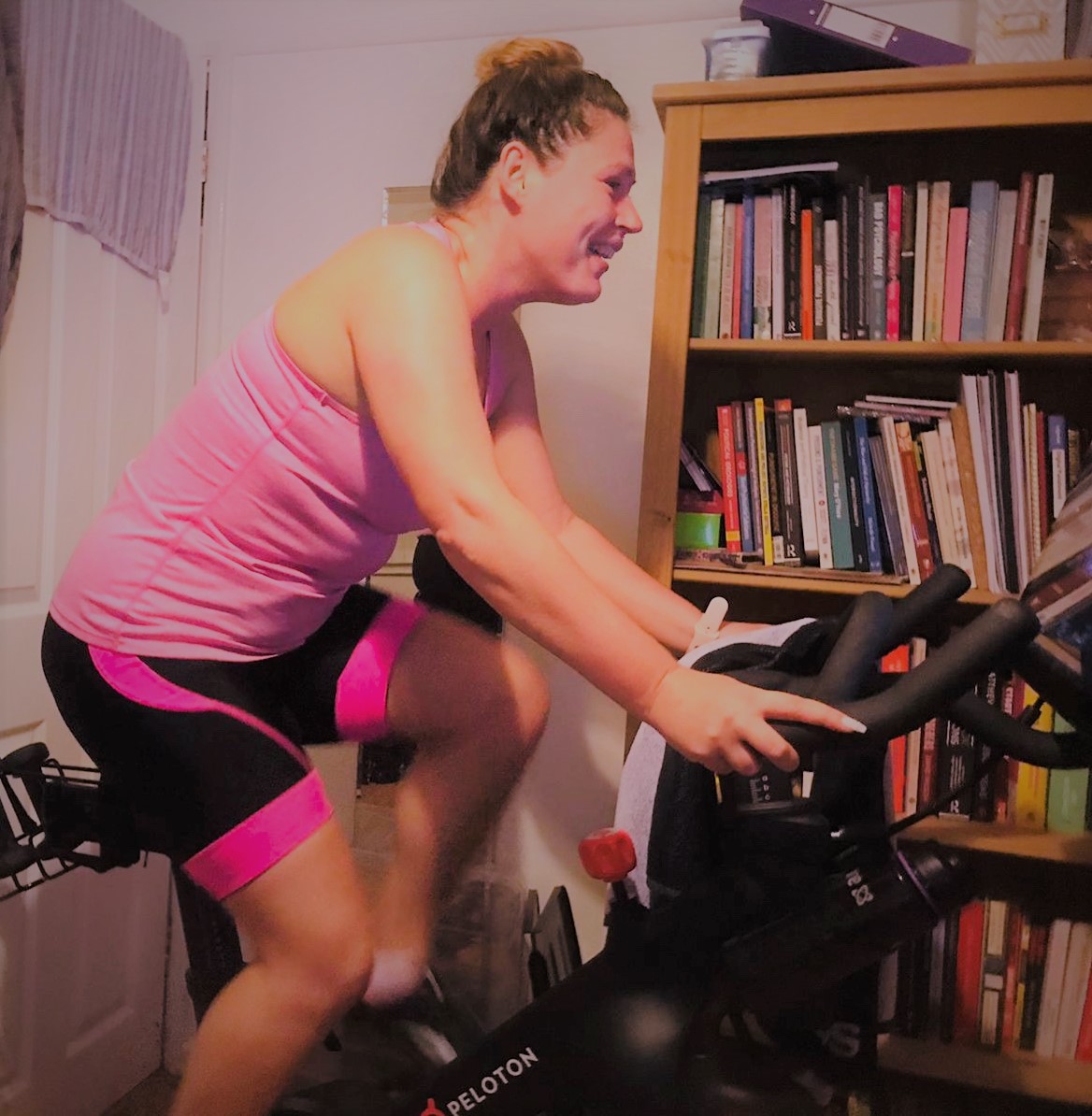
This year, throughout December, despite the pandemic, I have committed to ‘cycling for success’ (mostly indoors on a static bike!) with a target of 100 miles a week, to raise money for future Longford Trust scholars (See link below).
There is no set target but a summary of typical costs:
- £1500 – £3500 per year helps cover a scholar’s living & study costs
- £500 helps a scholar buy a laptop
- £25 can purchase a specialist text book
My life changed through the dedication of an organisation who support financially and through mentoring throughout a three year scholarship. But whose support never really leaves. This is more than bearing witness to traumatic life experiences, Longford Trust takes action to provide second chances through education. It redresses imbalances affecting many people within the criminal justice system
I hope you’ll support me, so together we can reduce the cycle of harm by ‘cycling for success.’
If you would like to donate for Longford scholarships click on the link here:
https://www.gofundme.com/f/ruw5yq-cycling-for-success
#cyclingforsuccess