‘My books took me to the far corners of the world’
This summer, our Longford Scholar Mark Alexander achieved a first – not a first-class grade, though he has managed those, too, but rather he became the first serving prisoner to sit and pass the professional examinations the Law Society sets for those wanting to work as solicitors. Now released, he writes about the barriers he faced and how he managed to overcome them
In August of this year I became the first-ever serving prisoner to sit and pass the solicitors entrance exams in England and Wales, now known as SQE1 and SQE2. Introduced in September 2021, the SQE is a centralised assessment set by the Solicitors Regulation Authority that replaces the old LPC (Legal Practitioners Course).
It is notoriously difficult. There were 7863 candidates in my SQE1 cohort this January, and only 53 per cent passed. Most of us walked into that exam thinking the rumours about its difficulty had been overhyped, but after 10 hours confined to a solitary computer booth, the line of sombre-faced hopefuls filing out of that exam centre in contemplative silence was a picture of existential angst.
Looking around me at all of these people, I was almost certain I had failed. They had struggled in spite of being free, in spite of living in their own homes. I had licence conditions to meet and a prison to return to every night. Had I been too ambitious?
Inclusivity in Higher Education
Shortly after the first results came out and the waves of relief were still washing over me, I received an email from the University of Law. I had been nominated for their Postgraduate Significant Achievement Award, ‘recognising students who had overcome adversity, demonstrating perseverance and resilience under difficult circumstances’.
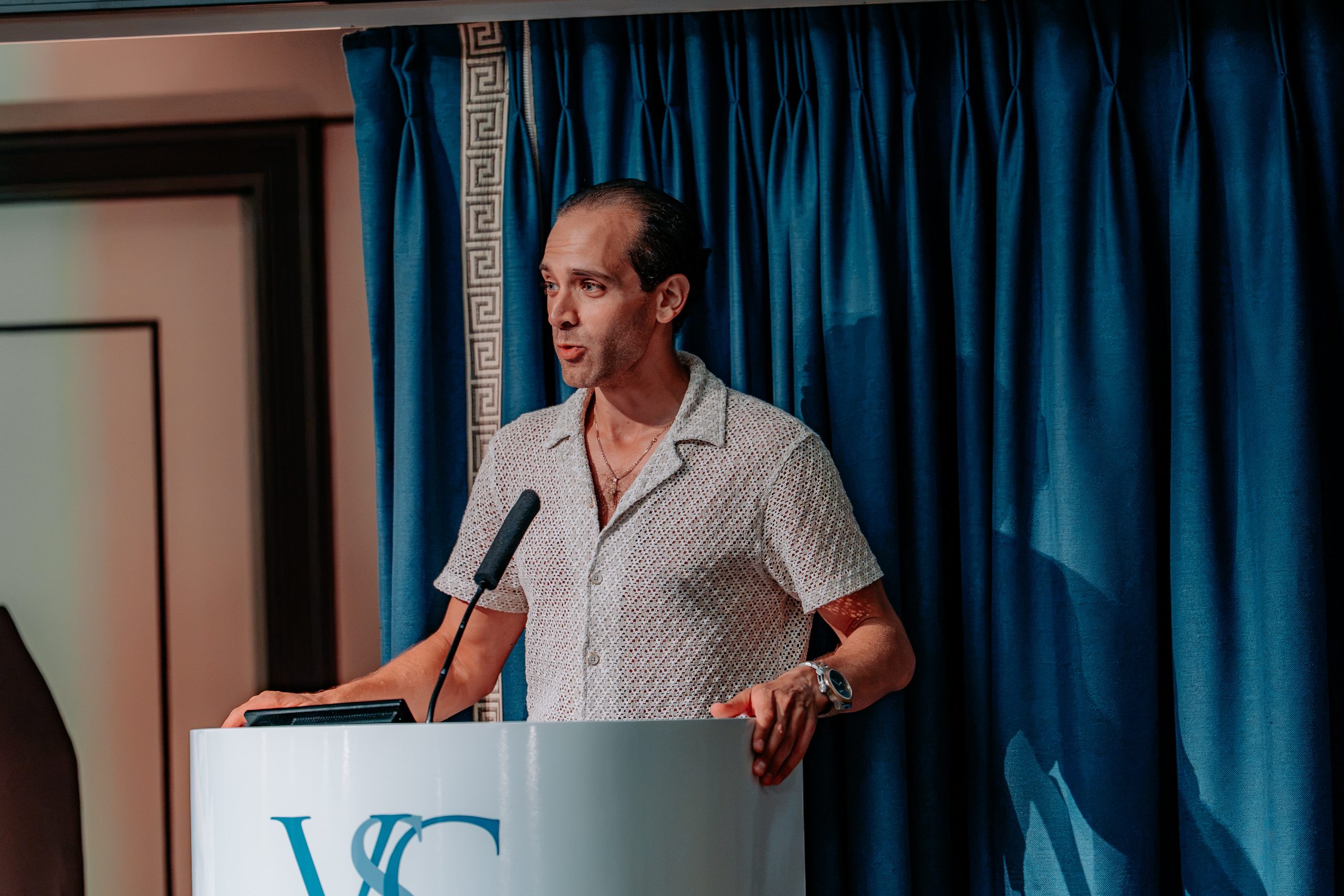
Their annual awards ceremony at Carisbrooke Hall was beautifully timed. I had been released from prison just four weeks earlier, after more than 16 years in custody, so was now truly free. To my astonishment, the hosts announced that I had won and began introducing me on stage:
‘Sentenced to life imprisonment at the age of 22, he had been just 7 weeks away from graduating in law at King’s College London…’
I heard a ripple of audible gasps, which only made me more nervous, but this was a bold statement of intent.
More than lip service to ‘inclusivity’
The University of Law wasn’t just paying lip service to ‘inclusivity’, it was embodying it and showing others the way. A few months later, in September, they launched the Justice Affected Students Pledge, a charter designed to enhance support for students with lived experience of the criminal justice system, which universities are now being invited to sign up to.
Many people in prison and on probation face significant barriers in accessing higher education, so the Pledge marks an important step forward in efforts to improve transparency in the admissions process and reduce discrimination.
Finding freedom through study
When I first found myself in prison it took me a while to regain sufficient composure to actually approach studying again. Much of my energy was absorbed in challenging my conviction in the courts, but the sense of time slipping through my fingers like so many grains of sand became increasingly palpable. I knew I had to find a way to exercise meaningful agency in spite of my circumstances and transform time lost into time well invested. Education was the clearest answer.
In the fever-dream of prison life, and the seeming inertia of a system that can all too easily consume every part of your being, studying instilled the passing years with meaning and purpose. It allowed me to transcend the reality of my confinement in ways that few other things could. My books took me to the far corners of the world, transporting me back in time while showing me visions of a radically different future.
The Longford Trust was the first organisation to really believe in me after everything that had happened. In 2016, they chose me for their prestigious Patrick Pakenham Award for Law, normally reserved for students who had already been released. That basic spark of humanity and empathy changed everything. Before long, I had completed my Bachelor of Laws degree and was embarking upon my Master of Laws through the same international programme at the University of London that Nelson Mandela had enrolled on. He had found a way to transform a place of oppression into a place of learning, and I knew I would have to cultivate the same discipline of mind:
‘Robben Island was known as “the University”. At night our cell block seemed more like a study hall than a prison. I had continued my studies throughout the trial. I was single-minded about it and I later realised that it was a way to keep myself from thinking negatively.’
Walking out into the light
I wanted to keep up the momentum when I moved to an open prison, so I took up an MSc in Social Research Methods at the London School of Economics. Having spent so many years unable to attend lectures or seminars, and without any access to the internet, it felt like an enormous privilege and relief to walk out of those prison gates every morning and make my way to an actual university where I could exchange ideas with other students and learn more collaboratively. The results speak for themselves. I came away with a Distinction and a place at the University of Cambridge, where I am now pursuing a part-time PhD in Criminology.
Somewhere in between those two things, I found time to squeeze in my solicitor training. The urge to do something in light of everything I had seen of the justice system was profound. The unsettling gap between the ideals espoused in our lecture theatres and the reality of legal practice was not something I could ignore.
Licenced Solicitors who have been to prison
Of course, you can count on one hand the number of licenced solicitors in England and Wales who have previously spent time in prison. It may surprise the reader to learn that even that many exist. Yet the wealth of knowledge and uniqueness of perspective that these individuals bring to their work is a rare asset.
It is a roster I hope to one day join as I begin searching for my first legal practice where I can complete at least 2 years’ supervised work experience before being considered for registration on the Roll of Solicitors. I would be delighted to hear from anyone with recommendations for legal practices that genuinely value diversity and inclusivity who might be worth reaching out to!
In the meantime, I am drawing upon my lived experience to support organisations like Unlock, the Prison Reform Trust, and the Prisoners’ Education Trust in their efforts to influence much needed change in the criminal justice system, breaking barriers and challenging the common misconceptions and prejudices that typically surround prisons and prisoners. There is much to be done, but if a life sentence equips you with anything, it is patience and resilience.
If you want to study for a degree, in law or any other subject, by distance learning while in prison, on day release when in open conditions, or after release, contact Clare Lewis who will explain how a Longford Scholarship could help you.