A good news story for prison education – and what it could be…

Author: | 9 Jun 2025

With prison education under strain, our Ambassador, journalist David Shipley, finds a new report ‘incredibly encouraging’ on the effectiveness of the in-cell education channel Way2Learn, part of WayOut TV that operates in half of all prisons

Prison education is a strange beast. Everyone seems to recognise how important it is, with research by the Ministry of Justice in 2018 having found thatpeople who had participated in education whilst in prisons were significantly less likely to reoffend within 12 months of release. Part of this may be because people who leave prison with good literacy and numeracy are more likely to find, and keep a job after release. We know, of course, that being in work is one of the most significant factors reducing someone’s likelihood of reoffending. So the Ministry of Justice, and the Prison Service, want education in prisons to be widely-available and of good quality.

Unfortunately it often falls short. Ofsted, the education standards’ body responsible for inspecting education in prisons and young offenders institutions, ‘have long been concerned about the standards of education in our prisons’.

Partly, this is due to limited budgets and the resultant challenges around hiring good teachers to work in prisons. But the environment itself is a barrier to education. Our jails are becoming less safe, with assaults up 14 per cent in the last annual figures, and serious assaults up 13 per cent. Dangerous, crowded prisons make learning hard. If a prisoner is concerned about their physical safety, they may find it almost impossible to concentrate in a lesson. Those who are worried about their safety travelling from cell to classroom may decide to stay ‘banged-up’ and avoid the risk of education entirely.

Barrier of embarrassment and shame

Another barrier to education can be shame. Around two-thirds of prisoners having literacy skills below that expected of an 11-year-old, and many dropped-out or were excluded from the education system. As a result, and unsurprisingly, they find the thought of sitting in a classroom and having their lack of education made public embarrassing and shameful. This fear alone can deter many prisoners from participating in education.

In order to address these barriers, WayOutTV created Way2Learn a decade ago. This service offers 18 scheduled courses, covering everything from music and creative writing to food hygiene and construction. There are also courses on broader skills, like goal-setting and running a business. Prisoners participate by watching the course segments and then completing and submitting worksheets to Way2Learn, where they are marked. Results got towards qualifications awarded by UWE.

‘An avenue of learning’

Now academics from UWE have conducted an impact evaluation of Way2Learn. What they’ve found is incredibly encouraging. Prison staff, prison governors and former Way2Learn students all have very positive views on the service. Way2Learn gives prisoners a sense of purpose, improving their mental health, while also developing useful skills. It also provides ‘an avenue of learning for…men who struggle to engage with more mainstream or traditional learning’.

The report  is a fascinating and encouraging document. After reading it I reflected that Way2Learn shows what the future of much prison education could be. The Prison Service is determined to increase the use of technology in our jails. More and more prisons are rolling-out in-cell ‘laptops’, which inmates can use to contact staff, email friends and family and perform prison ‘life-admin’ tasks (but not go on the internet).

Way2Learn could and should be offered on these systems, allowing prisoners to study a wide range of subjects in their cells, and removing the need for paper forms. I do hope that Prisons’ Minister James Timpson reads this evaluation . It’s clear that the prison service could do much more by working constructively with Way2Learn.

Read our scholars’ stories

What funding is available for people with convictions or in prison to study for a degree? See our Scholarships page.
Five stories that changed my life

Author: | 20 Feb 2024

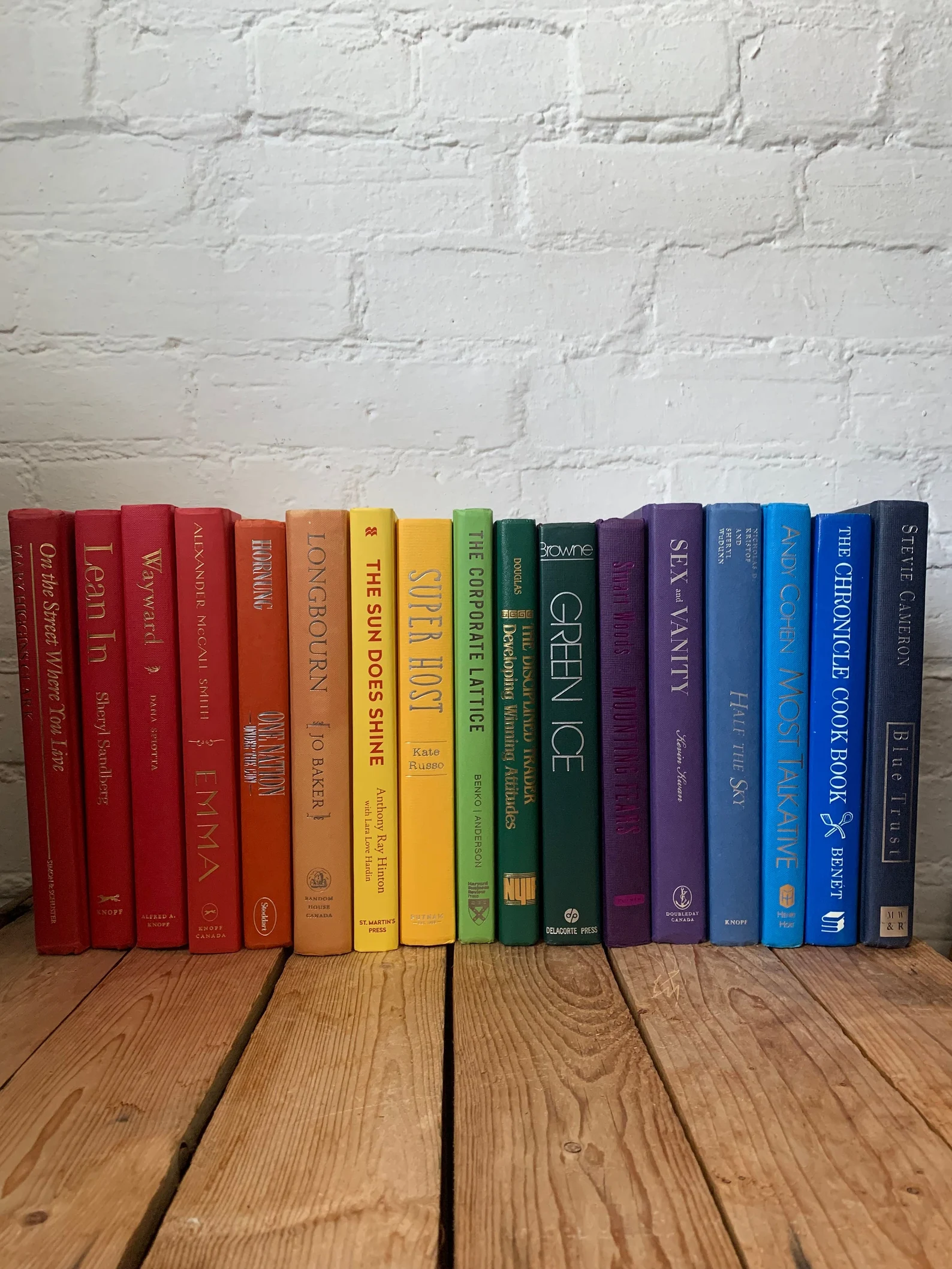
While serving a long sentence, Longford scholar Kieron devoted his energies to reading and studying. He wanted to be in a better position on release and have more opportunities than before. He is now studying at university for a MA and here he shares some thoughts and book recommendations on how to turn your life around.

In prison one of the things that motivated me most was learning about the stories of people in the same situation as I was back then, people who had started from even more adverse and or impoverished positions than I had, and yet were still able to achieve seemingly impossible successes. That is one of the key insights I’d like to share here because I found these stories empowering. They allowed me to think big and to nullify any self-imposed barriers, excuses or a lack of self-confidence.

I also found reading about black history (pre-the transatlantic slave trade) incredibly beneficial to my transformation. Learning about the inspiring cultures, inventions, great kingdoms and empires across Africa helped shift any inferiority complex I had allowed to flourish by not taking on board this history in my pre-prison education.

Thinking Skills

Reading and studying enabled me to understand the different way things are framed, and what effect this can have on you. It meant I could then identify the root causes of my previous mentality and recognise actions and behaviours in myself that were counterproductive to my newly formed long-term goals.

Such clarity of thinking has led me to formulate strategies to make fundamental and positive changes to who I am, and to overcome the circumstances that led me to committing the offence for which I was jailed. That doesn’t mean, though, I am making excuses for my behaviour. I still take full responsibility for my actions.

Learning Curve

Aside from reading a lot of books, I used my time in prison to complete over 30 educational and vocational courses, from restorative justice through Shannon Trust and construction skills to book-keeping. And everything in between. During the process, I learnt the satisfaction to be found on such a journey and how to celebrate small wins, like completing an assignment or finishing a book. I have experienced the positive feelings you get from achieving something on your own merit rather than seeking short-term, quick fixes.

Helping hands

Since being released all that hard work has been paying off in abundance and I am able to enjoy the little things in life I have missed. I am no longer afraid, or too proud, to ask for help to take advantage of opportunities whilst creating even more. Having completed a university degree whilst serving my sentence, I have now started with Longford Trust support a Masters in innovation management and entrepreneurship at Middlesex University. I am networking and seeking guidance and support for all the projects I am working on and will see through to fruition.


If like Kieron you too are hungry for relevant and reusable information on changing the course of your life, here he shares his top five life-changing reads.

(1) The 7 Habits of Highly Effective People by Stephen R Covey (Simon & Schuster, £11.95)

This book helped me to have a fundamental and rapid change in mentality, which then allowed me to rearrange my priorities.  My favourite line in it reads: ‘Whatever the mind of man can conceive and believe, it can achieve.’ Paradigm, prism, or lens describe the perspective though which we view the everyday events in our lives. Awareness of how our minds process input information enables us to create positive and productive output or actions.

(2) Opening Doors: How Daring to Ask For Help Changed My Life (And Will Change Yours Too) by Reggie Nelson (Blink, £12.79)

Pride and ego often got in my way and stopped me asking for help, even when I knew it was available. Wanting to feel independent and to receive full credit for achievements are natural feelings, but we need to understand that everyone one who achieved the things we aspire to achieve received help in some way, shape or form. Asking for help is a necessity not a weakness.

(3) Grit: Why Passion and Resilience Are The Secrets of Success by Angela Duckworth (Vermilion, £9.99)

This book gave me insight into the determining factors for success. Surprisingly they come down to grit and determination. Your drive and commitment outweigh your natural talent, resources, environment or support when it comes to predicting your success.  Best line: ‘The most dazzling human achievements are, in fact, the aggregate of countless individual elements, each of which is, in a sense, ordinary’.

(4) Think and Grow Rich by Napoleon Hill (Vermilion, £10.95)

‘Poverty,’, Napoleon Hill writes, ‘is attracted to the one whose mind is favourable to it, just as money is attracted to the one whose mind has been deliberately prepared to attract it.’  This book provides insights into how do people with money think about money that allows them to accumulate it whilst others don’t.

(5) Awaken the Giant Within: How To Take Immediate Control of Your Mental, Emotional, Physical and Financial Life by Anthony Robbins (Simon & Schuster, £6.99)

Consider a scenario where you’re heading to a job interview, and your car’s tyre bursts on the way. If you vent to a friend using words like ‘angry’, ‘devastated’, ‘frustrated’ or ‘stressed out’, they will trigger negative emotions, putting you in a bad mood.  In Anthony Robbins’ chapter on ‘The Vocabulary of Ultimate Success’, he encourages us instead to choose our words carefully and tailor them to the situation. For example, in the same scenario, you can use words like ‘disenchanted’, ‘delayed’, or view it as a ‘minor hurdle’ and an opportunity to look after your car better. This perspective shift is essential because the situation could have been much worse. ‘Words,’ he writes, ‘cannot only create emotions, they create actions. And from our actions flow the results of our lives’.