My Life in my Words

Author: | 30 Nov 2020

In recent years it has become increasingly common for people with personal experience of complex social issues including crime, prisons and the justice system to tell their stories publicly.

Michaela Booth, a Longford scholar with a First class honours degree is calling for a rethink….

A few years ago I was at a local radio station giving an interview about a research project I had been a participant in. After the interview I was asked by another radio producer, who said he followed me on social media, to record a separate interview with him. I agreed.

The interview wasn’t going to be aired live, so I figured (incorrectly as it turned out) that I would have a chance to re-record or edit any parts I wasn’t happy with. I remember the producer being very positive about my life, saying how fantastic he thought it was that I’d obtained a university place as a former prisoner.

I was confident the interview would shine a light on successes in the face of adversity.

I am not my past

During the interview when asked about my offence, I was clear I wasn’t there to discuss that. I didn’t think specific stories of offences were helpful when talking about progression and moving on. I did, however, speak of my experiences of discrimination post-release and the impact a criminal conviction has on people’s ability to live within society. I left the studio happy with how the interview had gone.

A few days later I was driving home from university with the local radio station playing in the car. Cue…..

Michaela Booth was the child of heroin addicts, who grew up on a council estate and was sent to prison for serious violence, she is now studying for a degree at the University of Worcester.

Panic struck. What would my family think if they heard it? Had I actually said these things? I wondered. My distrust of the media was immediately reignited. Once again, my personal, painful experiences, had been manipulated by someone with power, to feed society’s thirst for trauma.

The term ‘lived experience’ is a term often used as shorthand for people with personal experience of complex social issues including crime, prisons and the justice system.  It’s thought that their powerful accounts to media, at conferences and events can bring about change, that they can shape policy and shift attitudes where hundreds of pages of briefing notes won’t.

Here on my car radio it struck me how a well-meaning practice can go wrong.

Impact on family

At the time, my daughter was in primary school and my concern about the impact on her from this interview grew strong. I had been careful at every stage of the interview to make sure harmful stigmatisation was absent. I was at pains to tell my story in the context of the societal and systemic issues I had experienced; as opposed to a portrayal of a stereotypical narrative of a damaged girl who had achieved success against the odds.

After hearing the interview I contacted the producer to ask for the interview to be removed from the internet, explaining it was very damaging to my family and my daughter. Broadcast locally, I was aware social media accounts were already discussing my parents’ history. I had not shared any of these details in the interview and didn’t want to share. Nonetheless, the producer refused to remove the interview, arguing the narrative in the broadcast introduction was already in the public domain.

So, let’s just pause a moment. Because I had written about my personal experiences in my blog, the producer felt that they were entitled to use this information on the radio without my knowledge or consent. Let me explain why this feels so wrong.  Writing my blog is my way of dealing with my own traumatic past. At no time had I consented to traumatic and potentially damaging information being taken out of context, but somehow the argument seemed to be because I had put the information was out there, anyone could use and misuse the details.

My life, my words.

Days of anxiety and worry about my daughter went by. My attempts to persuade the production team were failing. Then it dawned on me. Around this time at university I was studying the principles of safeguarding in professional practice. The penny dropped. I requested the broadcaster’s safeguarding policy. Their reluctance to remove the interview seemed to me a breach of their duties to safeguard children.

Unsurprisingly, I was never sent a copy of their safeguarding policy, I simply received a reply saying that they had taken down the interview. After a week.

Trauma Tourism

This experience really highlighted to me the misuse of personal stories. A misuse which comes from places of coercion, a lack of sensitivity about the impact of disclosure on other people. I have begun to call this ‘trauma tourism’, whereby disturbing personal stories are commodified to meet a ghoulish demand.

Don’t get me wrong, story-telling can be powerful. In fact, evidence shows that when criminalised people articulate non-offender narratives and grow identities away from their past, they are much more likely to live a crime-free life.

In my career and in a personal capacity I had always advocated using people’s first-hand experiences to shape policy and practice. My radio experience led me to question a common belief that it’s a good thing for people’s often traumatic personal stories to be heard.

To explain a bit. When audiences hear and see these personal stories being re-told they respond as pitying spectators. Instead of helping to find a solution personal stories can backfire and provoke a crisis. The listener may be appeased but too often the re-telling doesn’t stimulate an end to systemic oppression, exclusion and marginalisation.

And let’s be clear, often the trauma is anything but ‘past’. For the narrator, they are often still very real and very current, likewise for their family and community.

So, if we really are committed to learning from people’s experiences of prison, the justice system and beyond we must do more than ‘give voice’, we must do more than listen.

The here and now: Cycling for success

So here I am, a First Class honours degree holder, a masters student, with a leadership role promoting health in justice. There have been numerous people who heard and acted to improve lives.

I believe education is vital in improving the life chances of individuals, communities and ultimately, organisations within the criminal justice sector. The Longford Trust invested in me after reading a 500 word personal statement. 3 years later, I hope I am a testament to the value and dedication of an organisation who does more than listen.

Can you help change lives?

This year, throughout December, despite the pandemic, I have committed to ‘cycling for success’ (mostly indoors on a static bike!) with a target of 100 miles a week, to raise money for future Longford Trust scholars (See link below).

There is no set target but a summary of typical costs:

  • £1500 – £3500 per year helps cover a scholar’s living & study costs
  • £500 helps a scholar buy a laptop
  • £25 can purchase a specialist text book

My life changed through the dedication of an organisation who support financially and through mentoring throughout a three year scholarship. But whose support never really leaves. This is more than bearing witness to traumatic life experiences, Longford Trust takes action to provide second chances through education. It redresses imbalances affecting many people within the criminal justice system

I hope you’ll support me, so together we can reduce the cycle of harm by ‘cycling for success.’


If you would like to donate for Longford scholarships click on the link here

https://www.gofundme.com/f/ruw5yq-cycling-for-success

#cyclingforsuccess


Facial Recognition Unmasked

Author: | 10 Nov 2020

Face coverings are a fact of life in the pandemic. It is mandatory to wear them in shops, schools and on university campuses. Slowly they’re becoming part of prison life too.

Recently masks have sparked a fresh debate about police surveillance.

Elliot Tyler, a Longford scholar who is a cyber security and forensics student at Portsmouth University has been delving into the controversial policing technology…

For a long time, I have been wary of facial recognition technology – software capable of matching a human face, either from from a digital image or a video frame, against a database of ‘wanted’ faces – used without people’s consent. I moved away from my London birthplace three years ago but returned to the city every so often to meet and have a drink with school friends. It always concerned me that my evening could be brought to a halt at any point by police officers scanning my face and determining I was somebody ‘wanted’, which I most certainly was not, having paid any debt to society that I’d previously owed.

Despite being very familiar with the ways of the police through my work as a police cadet, I did not trust them to exercise their duties impartially, responsibly and fairly. Little did I know that before long a global pandemic would see people hiding their faces, potentially disrupting the captured images.

Broken Images 

In the summer, a document leaked to an American publication outlined the worries of US agencies that face masks, now commonplace due to the COVID-19 pandemic, could ‘break’ facial recognition. The document, released as part of what became known as the ‘BlueLeaks’ hack, emphasised the possibility of ‘violent adversaries’ using protective masks to evade biometric identification algorithms – in other words, donning a mask to cheat identification.

Now that coronavirus has changed the world, and face coverings routinely cover the mouth and nose – key distinguishing features for anyone – the debate has taken on a new dimension. Commentators from both sides of the debate have raised concerns about how the wearing of masks could affect the accuracy of the technology.

To this day, it remains unclear, due to the regular emergence of new, conflicting survey results, whether the general public supports this new policing initiative. Opponents of the technology suggest there is a risk to citizens’ privacy. In a free world, individuals are supposedly allowed a choice when it comes to matters of consent.  However sceptics observe that permission can be simply non-existent when it comes to facial recognition. And anyway, importantly, those accused of crimes still have rights. Supporters claim if you go about your daily life in a law-abiding way, you have nothing to fear and everything to gain from effective identification to keep our streets safer.

What the experts say

I took it upon myself to consult three facial recognition experts with different perspectives on this hotly debated policing technique. First up, Chief Superintendent Paul Griffiths, the President of the Superintendents’ Association.

The public needs to be kept safe,’ Griffiths said to me firmly. ‘And that is achieved using CCTV, ANPR (number plate recognition), speed cameras, and other surveillance technologies.’

Our conversation continued with me citing US academics, who claim that effective facial recognition technology can prevent false arrests by quickly and accurately identifying faces.

It certainly isn’t the only method we rely on.’ He was keen not to be too gung-ho. ‘Data involves responsibility,’ I was told. ‘We need to be satisfied that the use of any data can support the police in their goals.’

The list of benefits from effective use of facial recognition, according to Griffiths, are early detection of ‘wanted’ individuals, allowing the efficient scrambling of police resources so officers can secure themselves and the public, possibly saving lives. Police officers can, therefore, spend their time maintaining order on the streets instead of searching aimlessly for suspects. It was explained to me that developments in technology should be embraced by police forces, but only where its use is necessary and proportionate. Police will operate with scrutiny, accountability and oversight when using personal data, Griffiths emphasised.

Lord Blair, Longford Lecture 2019

As a brief side note, in November 2019, at the annual Longford Lecture, I paid close attention to a delivery by Lord Ian Blair, former Commissioner of the Metropolitan Police from 2005 to 2008. Lord Blair explored the topic of ‘Where Next for Policing and Criminal Justice’. Concerned about a ‘tattered’ justice system, he promoted the wider roll-out of body worn cameras for future effective and consensual policing. Yet, surprisingly, he neglected to mention the ever-emerging matter of authorities’ use of facial recognition technology. The omission still intrigues me – but that’s one for another time.

Back to my second expert in this fraught field. Richard Lewis, recently retired Deputy Chief Constable of South Wales Police held a similar view to Griffiths. ‘Facial recognition can be a powerful technology for crime detection and prevention,’ he told me, adding, ‘when used appropriately.’

South Wales Police were this summer subject to legal action, brought by a father of two, Ed Bridges, who objected to his image being captured on a lunch break in Cardiff City Centre and again at a peaceful protest. With the support of the campaign group Liberty, the Court of Appeal found that the specific uses of facial recognition were unlawful.

But the Court also found its use was a ‘proportionate’ interference with human rights, as the benefits outweighed the impact on Bridges.

After the ruling, South Wales Police, who have used this type of identification method at big sporting fixtures, concerts, and other large events since 2017, said they could work with the ruling. A ‘factsheet’ produced by South Wales Police, which was sent to me before the Court decision, shows that in 2019, facial recognition technology resulted in twenty-two arrests and disposals at Welsh music and sporting events. It also rebuts common concerns about gender or racial bias within the technology. Typically, black men are thought to be disproportionately picked out.

The future of the surveillance business

Whatever the effect of face masks on the camera technology, I expect civil liberty campaigners will continue to voice their concerns about the premise of this policing technology. London’s Metropolitan Police is said to be the largest police force outside of China to use facial recognition, dubbed an ‘authoritarian mass surveillance tool’ by Big Brother Watch. Their spokesperson told me that public spaces are being turned into biometric surveillance zones, without any clear legal basis or authority, and contrary to the police rationale. They emphasised concerns about biased targeting of people of a certain ethnicity or demographic.

Be under no illusion, surveillance is big business. At the start of the year it was estimated that by 2024, the global facial recognition market would generate £5.5 billion of revenue. Of course, in the new post-COVID world, that may no longer be the case.

So where does this contentious technology head in the policing of tomorrow? In England and Wales, the police’s technology is still in a developmental stage, with three universities currently working with the Home Office to improve recognition accuracy.

This is by no means the end of the debate; in fact, I would say it’s merely the beginning.


Introducing new Longford Trust Chair

Author: | 14 Oct 2020

Meet Tom Pakenham, our new Chair of trustees. 

Here Tom writes for Longford Blog about his hopes and ambition for the trust and all those we support and work with. 

Not all difficult things are important, but all important things are difficult.

This saying applies as much to prison reform as it does the area I have worked in for all of my career, climate change. Both subjects are difficult because they are highly complex. People want quick solutions, but changes are required across our whole society.

The criminal justice system is held to account for offending and re-offending rates, but the fact is that crime is driven by a myriad of factors well beyond the control of the courts, the prisons and the probation service. Until it is widely understood that criminality has its root causes in health (especially mental health), education, addiction, housing, family life, economic opportunity and much more, society will continue to be disappointed by the inability of prison to prevent crime.

So where do I fit into the Longford Trust?

After 15 years as a trustee, I have become the new Chair after the death of our founding chairman, my father, Kevin Pakenham. His loss is a huge personal blow, and it is also a challenge for the Trust at a time when the conditions within which we operate are more precarious than ever before. Nevertheless, though humbled by my appointment, I am absolutely committed to ensuring the Longford Trust continues to punch above its weight by supporting second chances and advocating for prison reform and a more effective, evidence-based response to the complexities of crime, prisons and the people who live or have lived in them.

The trust’s pragmatic and humane approach is compelling to me. On the one hand, we run the annual lecture (outside of a pandemic) which stimulates fresh thinking about prison reform; a chance for people to share ideas and discuss at a high level what needs to change. And at the other end of the spectrum, on a practical level, the trust’s scholarship programme, provides a route for individuals to turn their lives around and reach their potential. Our work is symbiotic, each part supporting and informing the other.

From the word go, we have been guided by what makes a real difference.

When we launched the Longford Scholarships in 2004, we made just two awards with no certainty that we would make any more. Sixteen years later, though, we make around 40 awards each year. We have supported more than 350 former and serving prisoners in pursuing higher education, steering many away from a return to crime.  Currently there are 73 scholarship award-holders at different stages of their degrees at universities up and down the country, across a whole range of degrees from engineering, maths and IT to criminology, law, sports and equine studies.  Most remarkably, our return-to-prison rates remain less than 4%, compared to a national average of 40% within 12 months and 75% within 9 years of release.

And this last stat is what the Longford Trust is all about, doing our bit to reduce crime and its impact on society. It’s true that the trustees, the executive team and our supporters believe in forgiveness and redemption, I do too. But we are much more than this. We are a pragmatic, practical bunch who see the damage done by the failings of our criminal justice system and the deep pain that these failings cause to so many in our society, usually to the people who are already the most disadvantaged by systemic inequality.

We see, too, that prison is not a glamorous subject.

And, that it attracts too many salacious headlines and bouts of outrage at a crime of an extreme nature.

We see that it is far easier to condemn those involved in crime to a punishment-heavy response, despite the fact that this approach does not make a victim’s pain go away, nor indeed does it reduce the likelihood of other victims suffering similarly in future. We baulk at the extraordinary cost of imprisoning one person, more than a year’s fees to Eton (which, by the way, is £42,500). At the Longford Trust we are inspired by the idea that there must be a better way to balance punishment, public protection and rehabilitation.

Our work goes beyond the scholarship programme and the lecture.

Our scholars are supported by mentors, a crucial human bridge between time inside and the world outside. Mentoring is a surprisingly powerful way pre-emptively to address the sort of problems that lead to re-offending, whether housing challenges, a return to substance abuse, loneliness or difficulty in finding work. And, through the Longford Prize, we also recognise those people who dedicate their lives to working with people who have committed crime and the victims of crime. It may not be a huge amount of money, but when you spend your time working out of sight and generally without the social recognition that such endeavours deserve, the prize is a meaningful appreciation of your crucially important and often highly creative contribution to society.

My father would be urging us on to double down on the work to which his father, Frank Longford, before him had dedicated his life. He would urge us to keep waving the flag for prison reform, to stay true to our ultimate aim of improving the lives of all those touched by the criminal justice system. And so we shall, however difficult it may be.


Kevin Pakenham (1947-2020): Our Founding Chairman

Author: | 22 Jul 2020

There would be no Longford Trust without Kevin Pakenham. It is that simple. After his father’s death in 2001, it was Kevin who gathered and galvinised the friends and family keen to see some lasting memorial to Frank Longford’s lifelong work in prison reform. As those who have attended our annual lecture these past 18 years will know, having heard Kevin speak, as chairman, at the end of the evening, he was the trust’s most effective fund-raiser.

“As last year,” he would begin, “my subject is money”.

His enthusiasm for the work of the trust, in all its aspects, was infectious. So hard did he prove to resist, that we have been able to grow and develop on a secure, expanding financial base for two decades.

It is, therefore, with enormous sadness and profound shock, that I write to announce the death of our much-loved chairman. He died on July 19, 2020, after a very brief illness. He was 72, in the full of life. Everyone I have spoken to in the days since cannot quite believe he is gone. He had the energy, enthusiasm and drive of a man half his age, and so many plans for the future.

Kevin leaves behind many things that he loved and nurtured: his wife of just short of two enormously happy years, Ronke; his children and stepchildren, Kate, Tom, Ben, Hermione, Dominic, James, Sebastian and Kiriem; his siblings Antonia, Thomas, Rachel and Michael; an enormous circle of friends of all ages and all backgrounds who cannot believe this charismatic, witty, clever, humane, generous man has been snatched from our midst; the thriving corporate finance advisory firm, Pakenham Partners, which he founded in 2011 as the continuation of a stellar career in the City of London; and a long list of charities and causes to which he unstintingly gave his time and resources throughout his life.

The Longford Trust was the most personal of these. Its inspiration was Kevin’s own father, and the maxim that he had followed throughout his long life in the public eye, that to deny the possibility of reform and rehabilitation to any individual prisoner is to deny not only their humanity but our own. Its work was something Kevin believed in passionately, following the lives and fortunes of the hundreds of young men and women we have supported over the past 20 years, always having time to talk about them or to them when they needed advice and encouragement that he could provide.

Many new charities, set up in memory of an outstanding individual, flourish briefly but lose momentum as time goes by. Because of Kevin’s wise counsel at every turn, because of his thorough-going commitment to everything that was happening under the trust’s aegises, because he was prepared to seek out the donations required to make the stated goals of rehabilitation and second chances a reality, the Longford Trust has for two decades thrived and grown and changed lives and attitudes. In all of that Kevin, too, was a truly outstanding man and will be much missed. What we will continue to achieve will be another part of his legacy.

For those who want to read more about Kevin’s life, a full obituary was published in the Daily Telegraph on July 24. It is available (behind the paywall) by clicking here. Or can be read below.

We remember him and his grieving family in our thoughts and prayers. Eternal rest grant unto him, and may perpetual light shine upon him. May he rest in peace.

Peter Stanford, Director

PS Four brave and generous colleagues from Fresh Eyes Finance are planning to undertake a Three Peaks Challenge in Wales on October 10 in support of the work of the Longford Trust and in memory of Kevin. If you want to help them reach their target of £1500, follow this link.

*

Daily Telegraph Obituaries Page, Saturday July 25, 2020

Kevin Pakenham

City executive and author who followed his father Lord Longford into the field of prison reform

Kevin Pakenham, who has died suddenly at 72, sustained a high-profile career in the City of London over five decades, but the youngest son of the Labour cabinet minister and penal reformer, Lord Longford, refused to conform to stereotypes and ranged widely in a vivid life that was lived to the full, embracing literature, politics and, latterly, his own tireless work for prisoners.

Youngest children in large families sometimes have to fight to make their voices heard, as he found growing up the eighth of eight in what was usually referred to as a political or a literary clan, his mother the acclaimed historical biographer, Elizabeth Longford. If his parents set the bar high, his brothers and sisters also gave him much to live up to. In 1969, when he was still at university, his oldest sibling, Antonia Fraser, published her biography of Mary Queen of Scots, his brother Thomas Pakenham, The Year of Liberty, a study of the Irish Rebellion of 1798, and another sister, Rachel Billington, All Things Nice, the first of her 22 novels.

While he was always enjoyed a political debate, using his considerable wit to play devil’s advocate, he was only once, in the early 1980s, moved to throw his hat into the party political ring, when he stood unsuccessfully as an SDP candidate in local elections. His old friend Charles Moore characterises his political views as “anarchic conservative”, and that description applied equally to social conventions. When his theatre producer daughter Kate married, he insisted on traditional tails for the men, but walked her down the aisle pairing his own with shoes but no socks, and a panama hat.

The written word exercised a more profound hold on him. As a PPE student at New College, Oxford, in the Swinging Sixties, he founded Cover, a university magazine. In its pages, he published the first draft of “History”, a poem by Philip Larkin that opened with the much-quoted line, “Sexual intercourse began/In nineteen sixty three…” (It was later to be renamed “Annus Mirabilis” when it appeared in Larkin’s collection High Windows.)

Even after 1972, when he was busy making a name for himself in the global asset management industry, he continued to write for his own satisfaction. In the late 1990s, approached by a publisher about becoming another “literary Longford”, he asked – sending himself up when telling the story – what subjects attracted the most book-buyers. Cats and golf, came the reply. So he wrote A Gathering Bunker in 1996, and A Green Too Far in 1998, funny tales from the fairways, a favourite haunt of his, along with the tennis court.

And in the months before his death, with the help of his third wife, the award-winning ITN correspondent, Ronke Phillips, he had been putting together a collection of his own poems. It will be published in November as Songs of Love.

Though there was no great family connection with the world of finance, his decision to opt for a career in the City after doing postgraduate studies in economics at St Antony’s College, Oxford, could be seen as a rebellion against all that his parents had instilled in him. He liked jokingly to describe himself as the only right-winger in a left-wing family. It was more complicated.

There were, of course, practical considerations. He had a family to support. More significantly, he enjoyed the competitive cut and thrust of the markets, and was highly accomplished at it, passing his enthusiasm on to his son Ben, who has followed in his footsteps.

Kevin John Toussaint Pakenham was born in 1947 in north London. He was educated at St Philip’s, a Catholic prep school in Kensington (his parents were both converts), and then he followed his brothers Thomas, Paddy and Michael to Ampleforth College, the Catholic Eton.

1969 was a traumatic year for the whole family, with the death, in a car crash, of his journalist sister, Catherine. She was his next sibling up, and the two were close. He told one of his sons that for a period afterwards he would cry himself to sleep. Her loss had a profound influence on him. If he inherited from his parents a strong sense of the value of hard work and making your mark in the world, then there was also in his make-up ever after Catherine’s death a determination energetically to live life to the full. It gave him an ageless quality, forever relishing new ideas, new challenges, never stuck in any groove or era.

His career in the financial world, where his work in particular focused on eastern Europe, saw him hold senior positions at Rothschild Intercontinental Bank, Ivory & Sime, American Express Bank, and F & C Management before he became from 1988 chief executive of the fund manager, John Govett and Co, and from 1996 of AIB Asset Management. In 2000, he joined Putnam Lovell, and from 2007 was managing director of Jeffries International. In 2011, with his usual audacity, he started Pakenham Partners, his own corporate finance advisory firm. In recent weeks it had been celebrating the successful completion of the latest two in its long list of major deals.

His first marriage, shortly after leaving university, to the film and TV producer, Ruth Jackson, ended in 1984 after they had had two children together. Shortly afterwards, he married Clare Hoare, whose novels are published as Clare Harkness, with whom he had three children. It, too, ended in divorce.

In 2016, he met Ronke Phillips at a charity auction. He won her round by bidding over the odds for a painting she liked, and then presenting it to her. They married in September 2018 at St Bride’s Church on Fleet Street. In the acknowledgements to his forthcoming book of poems, he offers his thanks to “all those who have travelled the stormy seas, and particularly my wife Ronke, who has mastered the swell”. The couple would sail his much-loved boat, Cheetah, out of Rye, cheerfully enduring many near disasters in the process. He had, his lifelong friends said, found his soul mate.

Alongside his career in the City, and his writing, he shared his family’s long-standing commitment to making society a better place, as a trustee and treasurer of the Ireland Fund of Great Britain from 1989 to 2009, and from 2002 as the founding chairman of the Longford Trust, set up to continue his father’s commitment to rehabilitation as part of his high profile mission as a prison reformer. As fund-raiser in chief, his unceaasing efforts sustained the trust’s pioneering work in supporting hundreds of ex-prisoners through university into careers.

If asked, he would have played down his part as “just the money man”. For all his love of impromptu speech-making, he was at heart a modest, self-effacing man, happiest when spending time with his children and grandchildren, going for long walks, cold-water skinny-dipping, or quietly exploring an ever-expanding list of new challenges, most recently producing the pen- and-ink drawing that will accompany Songs of Love, which is dedicated to his late sister, the poet Judith Kazantzis.

He is survived by his children and stepchildren.

Kevin John Toussaint Pakenham, financier, writer and philanthropist, born 1 November 1947, died July 19, 2020


Meeting your idol: one scholar’s experience

Author: | 11 Nov 2019

What is it like meeting your idol who inspired a major life change?

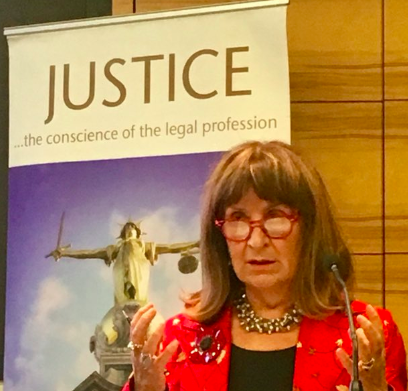
Longford scholar Emma read Helena Kennedy QC’s “Eve was Framed” whilst in prison. It sparked her decision to study law. Five years on Emma works at JUSTICE, a legal charity where human rights lawyer Baroness Helena Kennedy is President.

Longford Blog caught up with Emma during a busy working week…..


Recently you met your idol. What was that like?

Really overwhelming.  After looking up to her for so many years I was ridiculously nervous, so many people say don’t meet your heroes but she couldn’t have been nicer. She talked about her love of Longford and all it stands for. Then I told her that my personal officer in prison had given me her book “Eve was Framed” to read and about the huge impact it’s had on my life ever since. It felt as if she’d written it about me, I could relate to every word of it. Which made me cry. And that made her cry!

What struck you most about the book “Eve was Framed,” published more than 25 years ago, to highlight evidence of unequal treatment of women in the courts?

It made me realise I wasn’t on my own. At the time of my arrest there were very few refuge places left in the county I lived in. The fact that I worked full time and didn’t have children meant I wasn’t a priority for what little there was. I felt I had nowhere to go. The treatment I received from the police was incredibly poor, constantly being doubted about how bad things had been — being told multiple times, “If it was that bad, you’d just leave him”. Then finally on the day of my sentencing my barrister said to me, “You’ll be going to prison today, this judge doesn’t like women.” That’s not OK. I’ve always felt I was treated much harsher just for being female, I’ve always taken responsibility for what I did and I’ve paid the price tenfold. There are so many women in prison, just like me, with similar experiences, women who have lost their homes, their jobs and sometimes their children, just adding to the cycle of abuse and criminality. All over one mistake. We’re not immoral, or trouble makers we just need to be supported and believed. And to think it can all come down to one day, one Friday morning and a judge who doesn’t like women.

That’s not OK, I’m still really angry.

Why did that lead you to turn to education?

Really, it was down to that one book. I decided to study Law to learn about how it works, why it’s made, how it can be changed. My undergraduate degree is in Law & Criminal Justice and when I first started, I did want to become a lawyer but the more I learnt the more I realised I could have a bigger impact working in policy. Then I studied for my MSc in Clinical Criminology which is based much more on social science and the ways in which policy and law affect wider society.

And now you’re doing a six-month paid internship with JUSTICE, how is that?

I love it! It’s amazing to be taken seriously. I’ve tried to get a job for years and really struggled, so doing something I really care about with a charity doing such influential work is amazing. Everyone there has been so welcoming and supportive, I couldn’t ask for more.  I’m currently assisting on the research for a project on Racial Disparity in the Youth Criminal Justice System, which is fascinating. This is definitely the place to be to change the world!

What next?

I’d love to stay on past my six months but I know it’s not that simple. So, for now I’m working hard and make the most of it. Moving has been a huge change for me but I know it was the right thing to do. I’m becoming more and more aware of the many incredible charities doing such such important work. The opportunities are endless.

What would you say to your teenage self about reaching this point?

That’s a long time ago, and the last time I was this happy. I don’t even recognise the person I was 5 years ago… but I’m proud of myself, for the first time in my life. My confidence is growing every day. I really like the person I’m becoming.


Rooting for success: ex tutor’s perspective

Author: | 1 Jul 2019


Have you ever wondered what it’s like to be a tutor in prison? For Longford Blog, a former tutor (and now mentor) reflects….


Do the best you can until you know better. Then when you know better, do better. Maya Angelou

What a powerful quote, it catches me every time. These inspiring words from the late, great thinker and civil rights activist Maya Angelou hung in my classroom at the men’s prison where I worked in education for seven years. A group of university degree students made the sign for me which gave it even more meaning.

Up until Christmas 2018, I was a Tutor in prison, firstly teaching Social Skills and in the last couple of years overseeing Distance Learning.

I really enjoyed my work, feeling privileged to have worked with hundreds of students during that time.  Although, as far as I was concerned, I was just doing my job, the men I worked with constantly told me I was different from most staff they had come across in the system… that it was obvious I believed in what I was doing. I’m not sure if they were right about others. I do know what I believe. Education has the power to rehabilitate and steer people away from crime into lawful, productive lives where they can reach their personal potential. Every day I saw that and every day that’s what I strove for.

It still makes me smile, proud to think of the many men who started their transformation by learning in our department.  The journey often began because they had to study a course as part of their sentence plan. Then some – many more than you might think but not all, being honest – just got the education bug. After that they couldn’t get enough, completing every course on offer.

On a mission for every individual to achieve their potential….

So how was my unshakeable core belief in the power of education and the human capacity to change reflected in how I did my job? First things first, I tried to be student focussed in my approach. In addition, I was always solution- focussed. A ‘problem’ was something to be tackled. Perhaps most importantly though, I held every man I worked with in positive regard. What this meant is that they rewarded with confidence and respect for me.

Overcoming barriers to education in prison were part and parcel of my working life. From downloading post-graduate students’ academic texts from their online OU accounts, to allowing new students who had arrived from other prisons to access the Distance Learning room promptly so they didn’t fall behind. I was always trying to find practical solutions within the regime’s rules. If anyone had been a fly on the wall, they would have seen me running around the corridors delivering learning materials, mail and email messages from tutors to students.  I’ve heard too many stories of Higher Education students in custody held back by lack of access to course materials and resources. It can be as basic as receiving materials late – due to the slow progress through the prison system to the student. It always struck me that students in prison are often doubly disadvantaged before they even start a course. If I could do my bit to make the basics of learning in prison better, then I would.

So yes, my mission was to ensure every student had the best possible chance of fulfilling their academic potential.

As well as the practical side of things, I saw my role as helping to keep students positively motivated – especially when they were locked in their cells during evenings and at weekends.  I am a firm believer that motivation in studying translates, without doubt, into people’s long-term positive change in behaviour. Judging by my leaving cards the men noticed, writing things like,

Many people walk in and out of our lives. Yet few make an imprint. You are one of those people to make an impression that motivates and encourages without judgement.’

Another reads,

I’ve realised I am actually quite smart.’

Another talked of me never stopping for breath to help encourage and support.

Going above and beyond didn’t feel like a choice.  It was particularly exciting when men started to look for education which they could access from outside prison to quench their thirst for knowledge.  That was a brilliant moment. I can’t describe the joy a teacher feels when you see a student grow, develop and change. I don’t just mean their behaviour, but their attitude and sometimes their whole world view.  It is nothing short of a privilege to witness them transforming into happier, healthier and more positive human beings than they first set foot in a prison education department.

I honestly believe and feel proud to say that my role as tutor – and my former prison tutor colleagues – was pivotal in the students’ ability not just to succeed in their educational quest, but also for their own longterm change and rehabilitation.

Bringing the outside in….

Looking back on my time as prison tutor possibly my proudest achievement is bringing educational groups from outside into prison, breaking down the ‘us and them’ divide that prison walls too often impose.  For instance, facilitating a Post-Graduate Reading Group in partnership with University of Westminster where incarcerated men study alongside university students. Welcoming mentors – including Longford mentors who offered valuable belief in and support of several scholars – was also a legacy I am proud of, knowing that our scholars really appreciated the time their mentors took to visit and write to them. Working with the Open University, Prison Reform Trust and the Prisoner’s Education Trust is also a major achievement. These external organisations facilitated student forums, focus groups and workshops to ensure people in the criminal justice system are involved in the decision-making process. I’m very proud of the contribution the Distance Learners at the prison where I worked has made to improve not only the educational experience but also the whole custody experience for their peers and prisoners nationwide.  Their educational journey has allowed the students to grow and develop so they can articulate well to decision makers about changes to improve the experience of imprisonment.

My hopes: remaining open to new ideas and change ….

Although, just at the moment I am not directly involved in the education and rehabilitation of prisoners, I found my seven years teaching in the education department the most rewarding work I have ever done.  I was always busy, happy to support the men to make more positive choices and decisions.  I’m privileged to have been part of my learners’ journey through a spiritually oppressive system. I always rooted for them to succeed, doing my bit to help them carve out a brighter, more fulfilling present and future. I hope that my encouragement and support to the men that passed through our class, has enabled them to achieve, remain open to new ideas and change, continue learning, and achieve more. I plan to become a Longford Trust mentor and hope to support another student in a secure environment later this year.

I will forever hold Maya Angelou’s inspiration dear, because they know better, they do better and will continue to do so.


Wasting potential

Author: | 30 Apr 2019

Wasting prisoners’ potential to change their lives through education: Dame Sally Coates reviewed prison education for the government.

Here’s her verdict for Longford Blog on the newly-introduced reforms that followed her report….

In my own education world, I often hear teachers complaining that ministers in Whitehall move too quickly in introducing reforms without allowing them time to bed in. When it comes to prisons and the Justice Department, however, the opposite seems to be the case.  “Unlocking Potential”, the independent review that I lead into prison education at the request of Michael Gove, the then Justice Secretary, was delivered in May 2016.  Three years on, some of what was recommended is finally starting to trickle down into our jails.

Despite the delay, I welcome it as good news. Too many reports on how to improve our prisons end up gathering dust on shelves in Whitehall – though I can’t help remembering that Michael Gove did promise me, at the public launch of my report, to implement it, “without hesitation, repetition or deviation”.

Governor autonomy: a vital first step

His successors may not have fully honoured that commitment, but giving prison governors autonomy over how their education budget is spent, as is now happening and as was suggested in my report, is a vital first step. Governors have to take ownership of the education that is provided in their prisons – just as, for example, they take responsibility for security – rather than see it as something handed down from Prison Service headquarters.  When I was visiting prisons for my report, I came across governors who didn’t even know which organisation was providing the education in their jail.

In schools, headteachers are held to account for the education they deliver.  That is the strongest lever we have over their performance.  Prison governors need to be subject to similar scrutiny.  Having autonomy over the education budget is the best way to introduce that.  Progress is being made at last, for which two cheers out of three.

How it will work in practice….

It is not a full three because, under the new arrangements, the contracts for delivering education in prisons have been awarded to the same four providers as previously. What I had envisaged in my report was that there would be multiple providers coming into the system.  Now there is nothing wrong with sticking to the same four, if they are all good, but if governors truly are to have autonomy, then they have to be able to change providers if they aren’t satisfied with what is being delivered in their prison.  And I am not convinced that this is going to be easy to achieve under the new system.

In theory it may be possible, but because prisons have grouped together to work with particular providers, if one governor wants to hire and fire teachers, he or she can’t act autonomously but will have to go to the education provider, who employs those teachers.  If the provider then refuses, it is far from clear what happens next, but one thing is for sure. It is not going to be straightforward. Governors have a lot of other pressing matters to cope with rather than tackling poor teaching.

Room for innovation….

There are, I must stress, positive aspects to the new governor autonomy.  The DPS – or Dynamic Purchasing System – that has been introduced will give governors a budget to let out one-year contracts to bring other education providers into the prison to run individual courses. This will incentivise trying out new approaches and increase the range of options on offer to prison learners, especially in vocational subjects that don’t always sit easily in classrooms.

What’s not included?

To see if such innovation is actually delivering, though, we have to be able to monitor and evaluate it. And for that reason I am disappointed that my recommendation that every prisoner should have an individual learning plan – that follows him or her through the system, and allows the education provided to be measured against what has been agreed – still hasn’t become routine.  It remains, I am told, an ambition.  Yet without it how can governors be held to account over whether the education they are using their budgets to provide is genuinely meeting educational needs?

And where, too, is any improvement in IT access to promote education for which I argued strongly? Yes, there are now at best a handful of prisons allowing limited digital access in cells via tablets, but rarely is it set up to be used for learning.  That is such a waste! How effective it could be in encouraging prisoners to use their time in their cell to learn, and all without officers having to be involved to escort them to the education wing or the library?

Without radical reform, prisoners’ huge potential wasted….

My core belief back in 2016 was that good, targeted education is absolutely fundamental in bringing about prisoner rehabilitation.  That is why I argued in my report for a radical overhaul of the education system in prisons. What has now been introduced, however, doesn’t sound anywhere near radical enough. And that means the huge potential of prisoners to change their lives through education is continuing to be wasted.


Peter Stanford

Introducing you to our new Longford Blog. Join a Big Conversation….

Author: | 25 Mar 2019

You get used to negative responses when you run a prison reform charity. Not always, of course, but on occasion I have had doors shut in my face when talking about the Longford Trust, what we do, and those we work with – shut metaphorically, I should add, in the sense of closed or hostile minds, rather than actually, in most cases.  The experience has been sufficient to give me some small insight into how much worse it must be when what is being shut out is not a charity but yourself, and your future. 

It happens for a whole variety of reasons, but principal among them is that the stereotypes surrounding people who’ve been to prison remain extremely hard to shift. These are stereotypes that deal in generalities rather than individuals, that play on fear rather than fact, that are informed by negative newspaper headlines and crowd-pleasing politicians rather than real people with real lives. 

At the Longford Trust, we have always been about people who have been to prison and are working really hard for a second chance. We try to understand – but not excuse – the many obstacles that stand in their way so that they can be overcome and best of all removed. By launching our new blog on the trust’s website, promoted on our Twitter feed and other social media, we want to extend that work further to give those we work with, our Longford Scholars, a platform to talk about what they are doing, how the world looks from where they are. What works, what doesn’t, and what needs to change. 

The trust’s starting point back in 2002 when we set up was a belief in the power of education to transform lives – something Frank Longford (in whose memory we were established) said throughout his long life on the political front-line, and on newspaper front pages. Over 70 years in the limelight, he also (usually quietly) visited prisoners. Frank Longford said many things but one in particular informs all we do. If you write off any individual’s capacity to reform and rehabilitate themselves, then you write off not just them, but yourself as well.  

So let’s stop doing something so damaging.  Let’s turn to this new platform for discussion about what taking on such a positive challenge means in practical terms. Let’s listen to those who know this pathway inside out, and want to support and encourage others to walk the same road. We hope to inspire those in prison or have been to prison, who might think university and a degree might not be for them, to look at others and think if it might actually be in their grasp. With the right support, could you do it? This Longford Blog offers a platform for scholars – occasionally mentors and other supporters as well- to air concerns and offer solutions about studying when you have been to prison, about ways to make the most of employment opportunities. Alongside the efforts of many others, up to and including some ministers, let’s keep pushing forward with making prison sentences a start not an end. 

If you really care about something and want to blog as part of a big conversation, please let us know. Email: office@longfordtrust.org

Peter Stanford

Director, Longford Trust