How education gave me a second chance

Author: | 24 Mar 2023

Excluded from school for being disruptive Neil had no interest in education when he was sent to prison. But slowly he caught the learning bug and now has a degree to his name.  For Longford Blog he describes how, with our backing, he landed his dream job in prison reform.


The letters A,B,C,D are probably the most important determination of a teenager’s future, the higher the letter, the better their chances of carving out a successful career. Unfortunately for me, instead of getting a GCSE grade, I received a different sort of B – I was sent to a Category B prison.


Even if I’d stayed at school I probably wouldn’t have passed any of my exams. I had no enthusiasm for education, was disruptive and an all-round nuisance for the teachers who passionately gave up their time despite my antics. Looking back, this was even more depressing as I actually had an ability to achieve: I started out in all the top sets but found myself in the lower tiers because of my behaviour.


I was suspended and subsequently permanently expelled. A gaping hole in my personal development and a lack of structure left me destined for failure. And I became the ultimate failure, committed an horrendous crime and – rightly so -received a custodial sentence for longer than I had been alive.


Getting back on track


Spending time in the juvenile prison estate meant that I was faced with my arch nemesis again – education. True to fashion, I wasn’t interested, had zero motivation to learn, and attended just to get out of my cell. Now, 16 years on, I have a degree with first-class honours, am halfway through an MA in Crime and Justice, and I already have a blueprint for a possible PhD.


So how did I get hooked on education? In prison there is a requirement to complete Maths and English to an adequate level. For me this was boring but essential. Once you have completed the foundations, other courses become available. After spending four years passing English and Maths, I was invited to study Sociology at GCSE level. At this point I was more mature and enjoyed my tutor using the Sociology syllabus to help me understand how society works. As well as a qualification, I was learning about myself and how I had found myself in prison.


Getting motivated


I guess when there is an intrinsic motivation you are more committed to learn. As time went on, I was excited by study. I even washed the sleep out of my eyes to ensure I was bright and early for class. As well as attending lessons, I would pull out the books on a night-time and indulge in reading stuff outside the syllabus.


I stuck at it and achieved a respectable grade B. I had caught the education bug. With the same inspirational teacher, I next completed 7 more GCSEs. Then my tutor suggested I start higher education at The Open University.


Distance Learning and Student Loans


I continued with the Social Sciences, took advantage of a student loan to pay for my OU module costs and dedicated my time to learning. After navigating the prison system’s distance learning troubles, I graduated with a Bachelor of Arts in Social Sciences. I was ready to stop there. I was already anxious about release and didn’t want to incur any more debts through student finance.


Fortunately, I was responsible for helping other prisoners choose higher education opportunities and was made aware by my peers of what The Longford Trust offers. I noticed the energy and positivity among those who were on a Longford Scholarship and I wanted in! I applied and, to my delight, they awarded me three years of funding towards an MA in Crime and Justice.


A scholarship that goes beyond money


Once I had been accepted, the Trust’s director came to meet me in prison, explained that the scholarship is more than paying for tuition fees, and talked to me about finding a suitable mentor. Over and above the financial aspect of the scholarship, one of the key advantages it provides is having one of the Trust’s trained mentors to support you one-to-one.


I have now been in the community for twelve months and The Longford Trust has shared my resettlement journey with me. As well as getting my studies transferred smoothly from prison to community, they have offered me professional advice and a helping hand whenever I need it. So much so that they helped me land my dream job of helping fight for fairer outcomes in the criminal justice system. My rehabilitation journey would look incredibly different without them.


If you feel inspired by Neil’s story and would like to apply for a Longford Scholarship, contact Clare Lewis for details or an application form, or write to her at Freepost, Longford Trust (you don’t need a stamp)


What it means to be home for good

Author: | 6 Mar 2023

Many of our newly-released Longford Scholars are beginning – or continuing – their university studies at the same time as adjusting to being out, being back at home, being with their families, and with everything that goes with that. For Longford Blog, current scholar Mark reflects on the good things and the challenges he has faced since his recent release.


I want to try to give others an understanding of the challenges and difficulties those who have left custody face around adjusting back into family life while, at the same time, studying and trying to become a rehabilitated, functioning member of society.


Firstly, we all have a past, and I know there’ll be other people out there in my position who feel alone in their desire to change while still battling old habits so as to become a better person. Since release, some of the things I have noticed are stigmas and pre-judgements from those who don’t know what we have been through.


Change isn’t easy at any time

There is little understanding of how difficult it is redefining yourself when you have your past behaviours, the lack of self-belief you can feel, the lack of confidence and/or lack of education that gets in the way of taking the step to embark on a university degree.  Change isn’t easy at any time especially when facing how others may view you and the impact this can have.


When I look back to my old impulsive choices – negative choices – that I made without thinking, now I believe that these actions grew out of the rejection I faced as a child from my family, the people who were meant to love me. The lack of support I received contributed to behaviours in me that led at times to people getting hurt, often through what I would say. It was, I now see, ‘people-pleasing’ and trying to fit in. The negative opinions that people throw at you can be a huge hinderance when you’ve actively tried to change your life and be better.


How day-release helps

It was good to have the opportunity to come home on ROTL before coming home full-time. I could start to plan for release and to think about what a new routine might look like. Being home meant I was able to do work around the house that was certainly required and overdue – like decorating the wear and tear in the children’s bedrooms and other areas of the home that have come with their additional needs around behaviour.


And it has allowed me to spend time with my partner and children, rebuilding those ties and bonds. I could take them to school and be part of their education and be visible to their teachers. I attended their hospital appointments and, thereby, took some of the  pressure off my partner. There were fun family activities too. I began get to know them again as they have grown up a lot in the time I was away.


Most of the time, then, it was a positive exercise. But it was also very hard for the children to see me come and then go. They couldn’t understand why Dad couldn’t stay at home. One thing I will never forget was when I came home and decorated and changed their bedrooms. They didn’t believe I would do it before I had to go back to prison. But I did.


It’s not as simple as it sounds: you are always worrying about when you must be back at the prison and therefore spend a lot of time clock-watching. If you are late, even by five minutes, you can be stopped from doing ROTL again.


Home for good

Now that I am home full-time, those time pressures have gone. Yet, there are new challenges – living with four children whilst working  and studying. A few months in, I am pleased to say that I have managed to keep up with my university work and fully intend to keep going.  But it is not easy. I am at work four days on and then have four days off. I try to spend one full day in the local library but this doesn’t always happen as anything can come up with four children.


When I am not at work, I tend to do the cooking as my partner does everything the rest of the time. The huge hike in the cost of living has had its impact too. I am now fully responsible for my four children, my partner and the household finances. At times that is scary. How to make ends meet causes me to lose sleep. Unexpected bills like school trips can be a huge burden. When I came home I needed a car to get to work but, due to my criminal past, the insurance was much higher than I had expected.


In prison time was never an issue with my studies. Now it’s hard to find. To be honest, I wasn’t prepared for what the change would mean or look like. There have been obstacles to climb.


Living proof

Another challenge facing those like me who haven’t had a regular education is finding the continuing motivation and support required to study at university level.  But I’m living proof – having almost completed my BA Hons in Psychology with the Open University – that with the right people like The Longford Trust behind you, it is possible and achievable. If I can do it, others can too.


My advice would be to be honest with those who are working with you, not to feel it’s wrong to be struggling or finding things hard as you almost certainly will at points. When the journey feels lonely and challenging have faith in what you can achieve, take it in small steps, and always make your goals SMART – specific, measurable, assignable, realistic and time-related.


If you are in prison or newly-released and want to study for a degree but worry about managing the challenges that will present, go to The Longford Trust’s website to find out what support is available. Or email our Scholarship Manager, Clare Lewis.

I was scared of taking on a degree

Author: | 8 Jan 2023

For Longford Blog, Simon, from our latest intake of scholars, reflects on his journey from arriving in jail and dismissing the idea of a degree because ‘all I had was GCSEs’, to overcoming his fears, beginning studying, and continuing on release from prison. If I can do it, he urges others, so can you…

Adjusting to being in prison at the start of my sentence was extremely hard. I needed a release to keep my mind focused. This is when I discovered training in the gym. It was my escape and kept me mentally and physically strong through tough times.

I was also thinking about how to improve myself so as to leave prison physically and mentally stronger. One day an Open University team came in to give a talk. From the first moment they spoke, I knew this was the path to go down. My biggest problem was what subject to study?  I asked family and friends for advice and decided sport, fitness and coaching.

Taking a leap of faith

I was scared. At no point in my life had I ever thought I was capable of studying at degree level. I’d done GCSEs but nothing more. A friend on my wing who I would train with in the gym reassured me. ‘You enjoy training and sport. You can spend many more months thinking about what you want to do and if you are capable. Or you can take a leap of faith, study a subject you enjoy and give 100% to it.’

That was the day I sent in my application. I wanted prove to my family that I could be a better man and achieve great things. To show them my dedication to studying was a way of  showing them and myself that the future could be better.

At the start of my studies I found it extremely hard to keep up with deadlines and find the time to study in the prison environment. As time went on, though, it became more natural. I began going to the prison library and borrowed all the books I could find on academic writing to try and learn. Soon I was achieving marks of between 70-80 per cent for all my modules. Access to computers and study material was really hard, but this was something I was doing for my future so I made sure I did all I could on my own, to reach my targets

Happy with the man I am today

Over the course of my sentence, I believe I have matured immensely, and feel happy with the man I am today. I put it down to maintaining a strict routine with exercise and studying. Without these, I don’t know how I would have reached the end.

When Covid came around, studying and prison life became very hard. We were all locked behind our doors for 23 and a half hours a day. I used the time to study extra hard and dedicated eight hours each day to reading and writing and an hour a day to learning a new language (Mandarin) to fill the time. I also wrote in-cell workout programmes and nutrition plans for other inmates to ensure we were all keeping active.

Fast forward to 2021 and I was transferred to an open prison which was great because I had more freedom and better facilities to focus on my studies and plan for my future. On day-release on several occasions my family travelled up and I was able to spend quality time with them.

My transition from prison back into the community has so far been a smooth process due to careful planning and a wide range of support. Not long before being released I made my application to the Longford Trust and was granted a scholarship. This involved a financial grant, a laptop to study with, and a mentor. Now I am continuing on the outside with the final year of my degree with the security of the trust’s support.

My mentor is amazing

My Longford Trust mentor is amazing. He will sit with me and go through my work, help me to understand areas where I could improve. He is also there for emotional support should I need it during these challenging times.

If I could give any advice to other prison leavers, it would be to be realistic in your future plans. Locked behind a door can give you a false view of the world and what to expect. Use all resources and support as best you can because life outside of prison is a huge transition.

Find out more about our Longford Scholarships and Frank Awards. You could soon be walking in Simon’s educational footsteps!


Why You Can’t Better A Christmas Book

Author: | 15 Dec 2022

If you’ve got a spare moment this festive season, for Longford Blog former scholar Dempsey tells his story of prison, Christmas, books and their power to transport us wherever we find ourselves

A supermoon shining older and colder than superstition cast a wintry light over London while the world hurried over cobblestoned streets to the seasonal sound of bells.  Gleaming brass bells ringing hopefully and insistently in the white-gloved hands of the streetcorner Santa.

From high-end boutiques dressed up and down and all around in silver and gold, from the gap-toothed vendor selling bourbon-laced eggnog with candy cane straws, to the young and old church group singing “We Three Kings” beneath a Victorian-era lamppost, make no mistake about it, Christmas time was here.  Here holding the candle of religion in one hand, here bearing the torch of commercialization in the other.  “Ring-a-ling, hear them ring, soon it will be Christmas Day.”

A venerable smell

I was headed toward Hatchards, a Piccadilly bookshop that has been doing business in greater London since the 1700s.  I walked into the carpeted shop and over to a vintage end-table neatly stacked with contemporary works of fiction.  On an adjacent end-table were books of military history.

Surveying the shop as if I were about to rent a room, I could sense its comfort had been earned rather than given.  The place looks venerable, smells venerable and, with its glossy mahogany tables, ornate banisters, and green-shade bankers’ lamps, feels venerable.

I found the section with the works of Charles Dickens in paper- and hardback resting on high shelves and long tables. Taking David Copperfield in hand, I sat down on a well-worn burgundy leather Chesterfield that felt like the ne plus ultra of comfort.  While I reread the first page of the classic for the first time in a long time, an orchestral rendition of “Carol of the Bells” stole through the entrance whenever someone entered or left.  I felt a deep sense of belonging in that bookshop, a supreme contentment created by the holiday season, antiquated atmosphere, and the ghosts of all those Dickens characters floating from stories of the long ago.

Novels that sustain

I didn’t always have the luxury of visiting an elegant bookshop in a cosmopolitan city because I had been in prison for most of my life.  Been right behind the looming concrete walls of a prison in a part of New York State that stayed cloudy, stayed dreary, stayed brutally unsympathetic and impersonal, but most of all, simply stayed.

I was occasionally asked how I did my time.  How I served a lengthy sentence without breaking down and dissolving into the earth.  I invariably replied that I was saved by the novel, spared the destruction of imprisonment because of the novel’s ability to transport the mind, reroute and redirect thought and feeling.

The novel can entertain as much as it can sustain.  Books also shore up the abiding loneliness of imprisonment.  Lessen the sting of prolonged banishment.

In prison books are my world

A large part of life consists of the people who come and go from your life.  Some people you don’t mind never seeing again, others you do.  Books, their characters and the stories they tell become your friends.  Friends who remain.  Important and towering allies in an often cold and alienating world.

In prison books were of paramount importance to me.  When I was young, I felt that my friends were my world.  In prison my books were my world.  They were fulfilling and reliable and if I’ve yet to fully express what the novel has meant to me and can mean to anyone, I’ll offer up the words of F. Scott Fitzgerald: “That is part of the beauty of all literature.  You discover that your longings are universal longings, that you’re not lonely and isolated from anyone.  You belong.”

Not just another brick in the wall

Author: | 18 May 2022

This week prisons and the justice system have been in the news. Firstly, a joint justice inspectors’ report found recovery from the pandemic at ‘unacceptable levels in some areas’, whilst education is too often neglected. Today, MPs have called for urgent action to strengthen people’s access to high-standard education whilst in prison.

Our Director Peter Stanford, who gave evidence to the House of Commons Committee has written for Longford Blog:

There are some pressing, damaging problems that face us as a society where readily achievable solutions are hard to find, or else hotly contested.  Thankfully, that is not the case when it comes to tackling the staggeringly high number of prisoners who reoffend within 12 months of release. Depending on which figures you use, the current rate is between 40 and 60%.  We know a good part of the answer.  So the only real question is why are we not acting on that knowledge.

Today’s report, Not just another brick in the wall: why prisoners need an education to climb the ladder of opportunity, from the Select Committee on Education on prison education once again confirms that a decent, well-funded education system in our prisons has enormous potential to change lives, cut reoffending, reduce the cost to the taxpayer of prisons, and make us all safer.  But this message is nothing new or surprising.

In 2015, for example, I was a member of the panel working under Dame Sally Coates on a report on prison education. We handed Unlocking Potential, our recommendations, to the then Secretary of State for Justice, Michael Gove, in 2016 and he promised, in public, to implement them ‘without hesitation, repetition or deviation’.

Yet, as the Select Committee’s report sets out, next to nothing has happened about the vast majority of Coates recommendations. So it makes them all over again.

Will it be different this time round?  Well, I have faith that, if you say something sensible often enough, eventually someone will listen.  I therefore agreed to appear before the committee in April 2021 to offer once again the perspective of the Longford Trust from its work supporting young serving and ex-prisoners to go to university.

At the end of my session, I was asked by the committee chair, Robert Halfon, what I would most like to see change.  At the risk of repeating myself, I said supervised internet access for serving prisoners so they can benefit from all the life-changing opportunities that distance learning with providers like the Open University offers.

And the Select Committee makes that one of their main recommendations. It also backs another long-standing wish of the Longford Trust – that student loans should be available not just to serving prisoners with six years or less to go on their tariff (the so-called Six-Year-Rule), but to all who can demonstrate that higher education studies would improve their prospect of rehabilitation.

On this second point, though, a junior minister at the Department for Education is reported as having told the Select Committee that the government did not want to give student loans to prisoners, ‘who have no prospect of paying those loans back’.

Does he think that prisoners never come out, never go on to use the educational qualifications they have undertaken while inside to get well-paid jobs?   More than 80 per cent of Longford Scholarship award-holders, all of whom receive student loans, do precisely that.

Evidently not, which dampens hopes that this Select Committee report will succeed where others before have failed in focussing minds on improving prison education. But we will continue unceasingly to argue the case because we know from experience that it is unanswerable.

Education changes lives for the better, in prison as everywhere else.

Aiming high: keeping hope alive in prisons

Author: | 6 May 2022

In November last year, social justice commentator George the Poet gave a thought-provoking speech to Longford supporters, scholars and mentors.

He talked about the game being rigged – not just in prisons and the justice system but across society. He said ‘there are no choices without chances’, proposing that prisons should be re-modelled as development centres with opportunities, rather than detention centres.

George’s words  [watch again here] continue to resonate, so much so that months later former scholar, Richard got in touch with his own reflections:

Time and rehabilitation

Inside you have time, time to reset. On the outside, we wish we had more of it.

Spending three years in prison from 2007-2010 gave me insight into how the prison system is ‘rigged’, stacking the odds against individuals, focused on punishment rather than rehabilitation.

I only heard the word ‘rehab’ in association with drug taking. What I experienced was underfunding, undertrained/skilled staff in rehabilitation, limited options, limited information, limited support and guidance. I pushed for avenues to develop and use time wisely, but was told, ‘we’re not geared up for people like you’.  People like me, wanting to use my time productively, rehabilitate myself. A strange response to me under the circumstances.

I took Carpentry City and Guilds, Business Studies and Personal Training courses until funding lapsed on all. I even managed, through special permission from the governor to gain internet access to complete my University application (at first denied) and just squeaked into the Autumn 2009 intake.

When I went to prison it was my first offence, devastating and traumatic for everyone involved but I had all the support anyone could want in that situation. For that I consider myself lucky. Many friends inside weren’t so fortunate. I did ok in school but I couldn’t help but question what hope there was for those spat out of school, in care, or just not encouraged when young in school, or even by their parents.

Education, work and health are the basic principles in society.

The Game is Rigged: Detention Centre or Development Centres?

34% of prisoners read at the level below an 11year old. This is no coincidence. It’s good to see we now have a prisons inspector, Charlie Taylor, who is determined to address this literacy defecit.  Prison is the last line of defence in my view, it must be a duty of society to provide these opportunities, a real option to rehabilitate, a second chance I thought. This doesn’t need to be traditional education, it starts with support and information of where to start, developing and building on your interests with opportunities associated to those outside the prison walls. A place of hope and clarity. Only then can everyone in prison look in the mirror and decide to take that option of development, or not.

Without this support the game must be rigged, right?

The only ‘help’ preparing me for my release focused on the need to tell an employer I have a criminal record and that it will never be classed as ‘spent’, emphasising to me it was against the law not to disclose.

In the first five interviews after finishing my degree I declared my record, resulting in me not moving to the next stage. In my sixth interview I said nothing, went through 2 interviews and got offered the Job. I then declared it and it was not an issue. I have moved companies five times since, all with the same outcome. I’m not necessarily advocating this approach but certainly at that time it seemed the only way to move on.

Hope and Chances : ‘Making it a worthwhile place to be’ 

 I didn’t want to become part of the system and a statistic. Educating or bettering myself however I could was a MUST, a driver for me and I’d urge everyone to think alike. There should be a trained staff member who goes around prisons, like a career advisor in effect, understanding what skills people possess and how those can be transferred into society. Would vocational, education or simple support and mentoring help?  What avenues of funding are available post release? What level does an individual need to be at on release to access a college course and help devise a road map to get there. Starting off is the hardest step of all. It’s about problem-solving – we all need to do it from time to time.

I can’t help thinking it would be great if prisons were like colleges and universities, specialised in certain areas: prison radio, cookery, trades, creative and arts, sports.  Again, become places of hope, providing the opportunity to develop an individual for their release, a successful release. Educating on not just subject matter but on life. Interpersonal skills, money management and communication are more important than ever. Giving people information on moving out of their home area, how they’ll feel, and what a new chapter can bring. And credit where credit is due it’s great to see local and national businesses, especially in construction starting to recruit from prisons. It’s an obvious talent pool, individuals can be fully trained and on site in just 12 weeks. Though maybe we shouldn’t get into the prison building plan (that’s another blog!).

So, as George the Poet says, there are no choices without chances and for now it’s largely up to organisations like Longford Trust and others to provide real tangible chance. They gave me that second chance and support I much needed at the time, 6 months prior to my release I met my mentor and secured scholarship funding which paid for my accommodation. They helped me to get a part time job and I moved from prison to university life with as little baggage as possible.

In truth, most critically they believed in me. They believed in my ability and the financial help fostered my ability to focus on my studies despite being severely dyslexic. It put me near to the opportunities my class mates had with emotional and financial support from their families. I completed my degree with a 1st class honours degree, top of my class in Project & Construction Management. With a chance given to develop, other successes will follow. There is no doubt.

I have gone on to manage over 300 men on site in central London, built some of the most prestigious, high-end hotels you can imagine to the tune of over £80m.

It all started somewhere and it’s quite easy to pinpoint. It began the day I first met my mentor.

If only the same level of hope, opportunity and belief in potential were hardwired into the prison system, then we’d have something to celebrate.


You can watch George the Poet’s lecture here.


photo by Dom Fou Unsplash

Turning a sentence into a degree: one scholar’s remarkable story

Author: | 9 Mar 2022

Turning a prison sentence into a university degree is what Longford scholars do. Second chances and a personal approach are at the heart of what we at Longford Trust do. A scholar is supported both financially and with a one-to-one trained mentor to help achieve their potential.  

More than 80% of scholars successfully graduate and get a degree-level job. Increasingly, scholars take advantage of Longford employability training and support. 

Applications for 2022 scholarships are open for 2022/23 academic year (see below for more)

One scholar who joined last year has written for Longford Blog about her journey to university….

There’s plenty written about what people lose when they go to prison. We lose our homes, our jobs, our families, every bit of normality that we may have ever had. Coming to prison at the age of 19 changed everything for me. Alongside the crushing realisation that I’d lost everything, I distinctly remember thinking about something else on my first night in a prison cell – what could I possibly do with my life in a new world void of opportunity?

Fast forward to the age of 20, I was working on the induction unit. A group of fresh-faced criminology students from a local university entered the wing as part of a prison tour.

I remember that feeling – the feeling that they were just like me but were totally different. All the doors that were closed to me were wide open for them.

They asked me questions about my time in prison, eager to know what life was like in our hidden world. When they left, I couldn’t shake the realisation that I would never have that kind of opportunity again. That feeling stayed in my head for months, serving as a constant reminder that my life had finished before it had started.

A year later, I was working as a Peer Advisor in the same prison. I was asked to conduct a talk for a group of first-year criminology students in the visits hall. I was immediately reluctant as I was sick and tired of being wheeled out as a reliable performer, ready to speak highly of the prison to any visitor in a suit at the drop of a hat. Persuaded by the promise of a sausage roll and a biscuit, I gave in and delivered the talk.

For once, I was honest about prison.

Honest about the inequality and deprivation that has filled our prison system to the rafters. I was honest about the reality that prison is a profitable method for throwing away everyone that society doesn’t want to see. For every ‘proper criminal’, there are another 50 women with the type of trauma histories that could keep you awake at night for the rest of your days. New to the world of criminal justice, the group of students were blown away by my stories and the simple fact that our prison system does not work.

The head lecturer of the group approached me just as the students were leaving. He asked about my release date, insisting that I should be at university. I still had three years to serve, so he suggested that I should start university as soon as I was eligible for open conditions. There was a continuous trail of communications between myself, the university, my family and the prison. There were so many challenges from every direction, and so much red tape that I never believed it would come to fruition.

I was given my ‘open status’ (where I could leave the prison on day release for study or work) in September 2020, just one week before the start of the course.

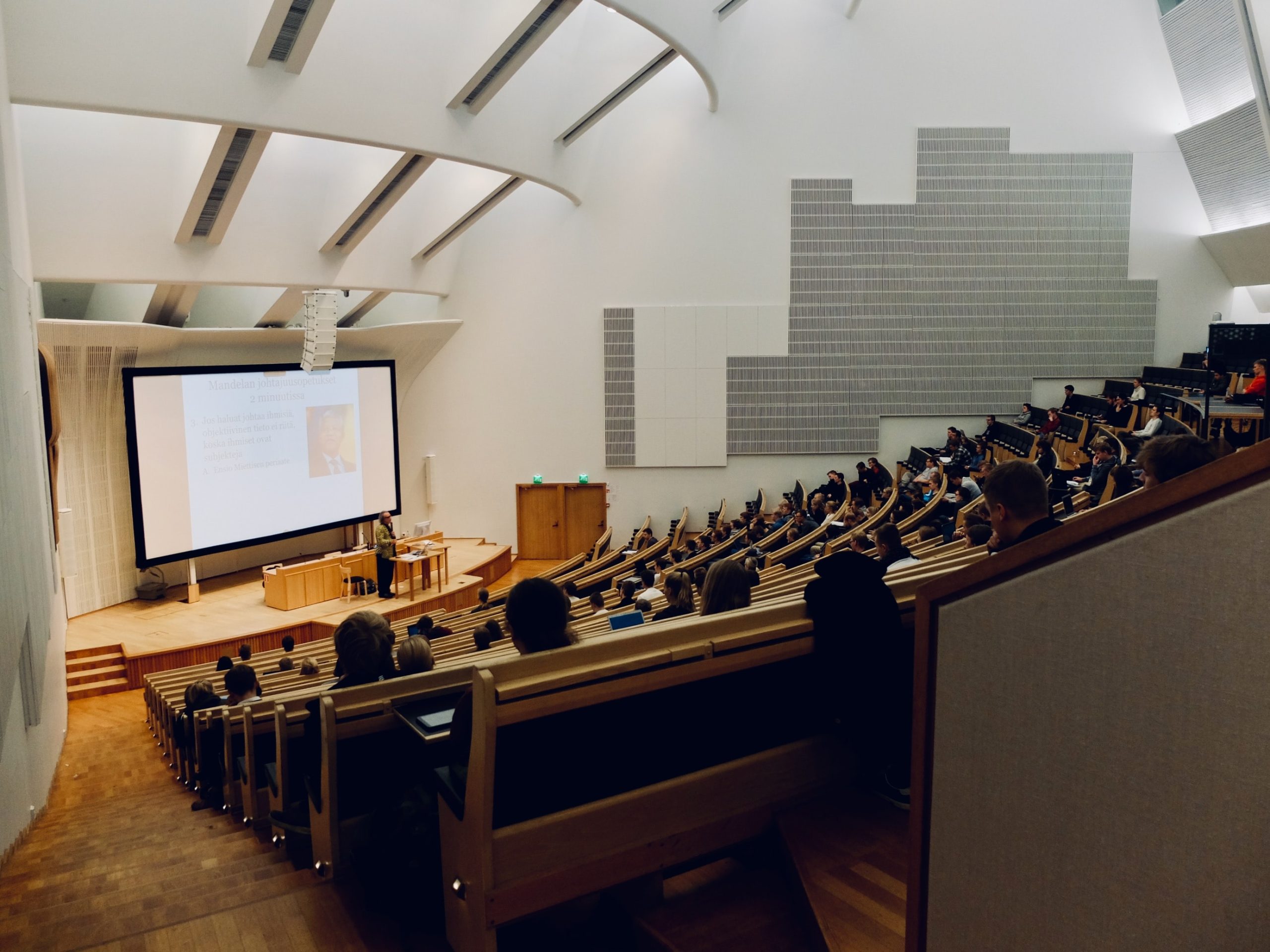
Walking into the lecture theatre for the first time….

felt just as unfamiliar and frightening as walking onto the wing for the first time. As terrifying as it was, I somehow felt like I was at home. I started to relax as soon as I realised that I wasn’t really that different from everyone else in the room.

I would learn that my experience would end up being an asset instead of holding me back.

I came across The Longford Trust whilst trying to find financial support during my first year of university. Though I was too late to apply for that year, I became a Longford scholar in my second year at university. It was incredible to know that there were other people on the same exciting journey as me. The Longford Trust partnered me with the perfect mentor. We now meet every two weeks and discuss all things criminal justice.

There have been plenty of challenges.

I often say that studying at university whilst in prison is akin to climbing Mount Everest whilst walking backwards and wearing flip flops.

Though this is the case, I’d recommend my journey to every single person in my situation. The opportunities that have been available to me since the start of my university experience are beyond what I ever thought possible. Alongside my studies and research, I work as a part-time lecturer. I am fortunate enough to be able to offer a rare insight into our world and educate prison staff about the important things that you’d never find in a textbook. To even consider what my life was like four years ago is truly unimaginable now.

I’ll end this blog with a short message of advice to every single person in prison. There are people waiting to hear your story. There are opportunities out there that are beyond the reach of the prison education department. There are people out there that are waiting to support you at every stage of your journey.

Believe in what you want to do, whatever that is, and stay tremendously interested in it.

It is only by running head-first at your passion that you’ll make your future what you want.

———————————————————————————-

Have you got plans to study a uni degree? Are you close to release or recently released? preferably in your 20s/30s, check out our 2022 application here: https://www.longfordtrust.org/scholarships/the-longford-scholarships/ 

 The closing date is 5th June 2022.


Pausing to reflect on how far I’ve come

Author: | 17 Dec 2021

For many this is a time of year to take stock, looking back on the year behind us. 2021 has, perhaps, invited more reflection than ever. 

As a charity promoting second chances for people in and after prison, we too have reflected that supporting Longford scholars into career opportunities is something we have a part to play in. For almost a year, a pilot employability programme has been running alongside our scholarship programme. 

Molly took on a new role through the employability pilot. Here, for Longford Blog she reflects on what she’s learnt….

The circumstances that led me to spend a year in prison are undoubtedly the worst thing to have happened to me and my family. With my mind and body in survival mode, I don’t have clear memories of my time inside. However, in my last days there, I remember vividly one of my closest friends saying, ‘Molly, when you leave don’t look back.’ She wasn’t being metaphoric, she was deadly serious. ‘Walk out of the gates and do not turn around.’

I followed her instructions to the T. I was released in the April and, with Longford’s support, hurried straight to Cardiff Metropolitan University in the September. I joined the equestrian team and swiftly took over as president, I worked as a student ambassador, became a student representative, completed 100 hours of work experience as part of the Cardiff Met Award, coached gymnastics, athletics, rugby and cricket, and started the CoppaFeel!: Uni Boob Team society… The aim was to place as much distance between myself and HMP Eastwood Park as possible with the hope of making my CV look good despite my conviction.

Focusing on proving myself outside of academic study by cramming distracting activities into my schedule was overwhelming. Balancing these commitments, alongside the mental health issues and trauma of being fresh out of prison led me to overlook my degree. Nevertheless, I managed to scrape a 2:1 in 2019!

Back on track

After graduating, I found a good job with good people who didn’t care about my past. Over the next couple years, I made Cardiff my home and settled into a comfortable position. More recently, I started my own freelance venture. Life is back on track. Except this summer, two years post-graduation, having worked tirelessly to put distance between my new life and my experiences, I found myself carrying around an unbearable guilt. Guilt for succeeding and leaving the people in prison behind.

If I wanted to make the feeling go away, I had to do something about it. I got back in touch with Longford in October and explained the situation….

‘I want to give back.’

When they offered to put me in touch with StandOut, who happened to be recruiting, ultimately I knew, despite the fear, that I couldn’t turn this opportunity down. Luckily, the role suited me perfectly; working part time meant I can confidently develop my freelance social media management services with the comfort of a stable income. Not to mention, resolving my desire to give back.

It all happened so quickly, I’m still confused by it. I spent the best part of 6 years trying to move on from prison and now I’m working in an organisation that challenges me to confront a lot of underlying emotions and internalised stigma about prisons every day. Whilst inside, I was aware of a handful of organisations who visited people in prison, but I never understood how dedicated such organisations are to supporting people to create a better life upon release. Whilst it’s frustrating that the current system requires organisations like StandOut to exist in the first place, it’s fascinating to learn more about the sector as a whole.

Now here I am, just over a month into my role at StandOut, feeling so grateful for the opportunity to work with a first class and committed team who work together to put people first. With their support, day- to- day I plan communications and support fundraising. Feedback from my new colleagues has assured me that I’m doing a good job! As a team, we have just completed a massive campaign for The Big Give Christmas Challenge where we smashed our initial target by 50% and raised over £90,000.

How far I’ve come

Whilst building my way up towards a wonderful job, growing a freelance venture, new home and beautiful family, not stopping to look back felt right. However, now knowing that I want to and can give back, a period of reflection is necessary. Although it’s not always easy, pausing to look back has allowed me to see how far I’ve come.

If you want to apply to become a Longford scholar to study a university degree in prison or after prison, you can apply here. 

Scholarship Application

Prison doesn’t work. But prison education does.

Author: | 2 Nov 2021

Better prison education means less reoffending, less crime, and less cost to society.  Our Director Peter Stanford makes a fresh plea for the virtuous circle of education in prisons.  

Current projections are that the number of prisoners in our jails will rise by 2026 from the current 78,000 to 100,000 – a huge increase when we already have the largest percentage behind bars per head of population anywhere in western Europe.  To accommodate such an expansion, the government has set aside £4 billion to build more prison places to cope with the consequences of its own policies of tougher sentences.

There remains in Westminster and Whitehall an abiding belief that prison deters both offending and reoffending. The facts suggest otherwise. In many categories crime is now on the rise, despite the repeated ramping up of sentencing guidelines. Meanwhile just short of 50 per cent of current prisoners will be convicted again within 12 months of release – more in the younger age groups.

Such a list of statistics, I know, is too often a prompt for readers to look away. For decades the prison reform lobby has strained every sinew to highlight such figures to create a public mood to tackle what by any standards feels like a pretty poor return for the £44,640 per year that it costs to keep each prisoner behind bars in England and Wales.

But for all their efforts, and the evidence they provide, as a society we remain emotionally addicted to the comforting old mantra that “prison works”, coined by Michael Howard while Home Secretary in the 1990s.

My own tiny part in this debate is around prison education.  For the past 20 years on a part-time basis I have worked with a trust, set up in memory of the late Lord Longford, that provides scholarships of money and mentoring to encourage young serving and ex-prisoners to go to university.

Numbers helped are small: around 500 scholarships handed out over the period, currently at the rate of between 30 and 40 each year. But our results, I would suggest, provide a practical and human glimmer of hope.

Just short of 85 per cent of those we support go on to graduate and use their degree to begin careers that mean they never offend again. Fewer than 4 per cent return to prison.

My day job is as a journalist and writer – so I could now give you countless uplifting and inspiring stories of those young men and women we have supported and how they are now thriving members of their communities.  But in the limited space I have to argue for a new direction in prisons policy and public attitudes to what goes on in our jails, I’d like to focus not on anecdotes (check out our website for these), but on facts.

Research shows that, among those in prison who engage with education, reoffending rates on release are closer to a third than the more general 50 per cent.  In other words, “prison education works”.

That is the argument I have been making in recent years to various official enquiries, including in 2016, as a panel member on Dame Sally Coates report on prison education, commissioned by Michael Gove when Justice Secretary.

I was there at its publication launch, on the other side of Parliament Square from the Palace of Westminster, when the man who remains a senior Cabinet minister accepted the findings with words Nicholas Parsons had made famous – “without hesitation, deviation or repetition”.

Since when, very little has happened to enact even the most basic of the reports’ recommendations:

  • That education be given a higher priority in prisons because we know it changes outcomes;
  • That every prisoner have a personal education plan (just as every learner in school does) as part of their sentence planning that carries some force and travels with them from jail to jail;
  • And that prison education provision continues to be inspected by Ofsted, but when it is judged to be inadequate or failing, something changes as result. At the moment, prisons can rack up half a dozen damning Ofsted verdicts and carry on as before. Just imagine if a school failed its Ofsted five times in a row and there were no consequences. Or if the prison inspectorate judged the prison hopeless at security.

The problem with the lack of follow-through since the Coates report, I must stress, is not simply money. The panel very carefully came up with a core set of recommendations that could happen within the existing tight prison education budget. The reason there has been no progress, I believe, is lack of interest.  Ministers calculate that there are few votes to be won by doing prison better. What electoral benefit there is, they believe, comes with doing prison more.

Hence the planned prison building spree.  The scheme hardly counts as leadership in the face of the challenge of reoffending by released prisoners that the Ministry of Justice’s own figures say costs to society and tax payer £18.1 billion. If you start making education more effective in prison, you will have less reoffending, less crime, and less cost to society. That is the virtuous circle.

Indeed, there could hardly be a better place to be investing resources in education than a prison.  Almost two thirds of prisoners have the literary skills of an 11-year-old – four times the level in general society. Some 42 per cent have been expelled or excluded from school, as against just one per cent of the total school population in England. So many young men and women, when they find themselves behind bars, have a light-bulb moment. They realise the opportunity school offered them for a better life, how they spurned it, and are now desperate for a second chance.

So where in particular should any new investment go? Two suggestions-

First, into a better-trained, better-paid, and better-equipped cohort of education staff in prisons, up to and including the equivalent of a Teach First scheme to bring new energy to a group that is too often at the bottom of prison officialdom’s rigid hierarchies.

And second, a rule change to allow limited and supervised access to the internet for studying for those prisoners who have demonstrated real commitment to education as a means of changing their lives.

The argument against such a change from the prison service (which instead has invested millions in the Virtual Campus, an internal intra-net system, closed off from the internet, that prison learners hardly use such are its inadequacies) is that any digital concessions will be used by prisoners to stalk victims or control criminal networks.

They may be right in some cases, but under suitable supervision, and if treated as a privilege to be earned which will be lost if misused, there are plenty of technical fixes to ensure such pitfalls could be avoided.

The need for such a reform has been made even more urgent by the pandemic, which has created a boom in digital education courses at all levels. As it stands, prison learners can have no access to them. So much potential is going to waste as a result. All those hours stuck in their cell with nothing to occupy them when they could be studying and getting qualifications.

The most compelling argument, though, is that, taken together, these two reforms would require a fraction of the budget set aside for building more prison places.  And the facts tell us they would deliver much better results. For us all.


This article was first published on Conservative Home. All figures used come from the winter 2021 edition of the Bromley Briefing, produced by the Prison Reform Trust

The friendship of books

Author: | 19 Jul 2021

The books which got me through.

Here for Longford Blog ex-scholar Dempsey shares his reading list of inspirational books which helped him to survive prison and remain ‘friends’ to this day.

Since books are about stories, let me first of all, briefly, tell you about me. Briefly I promise! I went to prison at 18 and came out at 57. Almost four decades behind prison walls.  Books truly were my salvation and inspiration during those years of imprisonment.

In darker moments, as I moved through the ages of man, the stories and the people in them offered not only company, but self-education and ultimately rehabilitation.

Perhaps this may be something others who’ve turned to books for for solace and escapism in the pandemic will recognise.

After my release in 2017 I was lucky enough to continue studying literature in an academic setting, thanks to the Longford Trust. So I want to share some observations of three pivotal books that stay forever with me. I hope what I have to say will strike a chord as much for those who have never stepped inside a prison as those who have been incarcerated.

One of the most influential books I read is an adventure upon the high seas titled Moby-Dick by Herman Melville.

For those unfamiliar with the story, Moby-Dick is a big, adventurous book that explores themes as profound as evil, religion, destiny, insanity, and race.  The themes are considered and examined through the eyes of Ishmael, a young man who decides to see a bit of the world by joining a whaling expedition.  Captain Ahab leads the search for a white sperm whale who bit off his leg and it is here, in Ahab’s monomaniacal desire to have his day with Moby-Dick, that the story gives rise to its major themes.  Ishmael views his time spent aboard the Pequod whaling ship as an education comparable to a tenure at Harvard or Yale, and his education grows during various incidents such as when he finds himself below deck staring into the ship’s tryworks, and after almost losing control of the ship he’s supposed to be above deck steering, Ishmael reflects: “…do not give thyself up to fire, least it invert thee, deaden thee, as for a time it did me…”   And how many times in our lives have we all, in some form or manner, become undermined by staring too long into the blast furnace of existence.

Another book I found that lessened the sting of incarceration is a classic story of adventure and misadventure that was written—perhaps by feather and ink—in 1605 by Miguel de Cervantes and famously known simply as Don Quixote.

Prison life is nothing if not tedious. Boredom is the surest companion to anyone inside. I longed for adventure, a chance to break free from my ball and chain and get out and do something, anything other than what I typically did from one dull day to the next.  I therefore found plenty of adventure and excitement through reading this book, here, in my opinion, is why.

The known world of routine corruption and commonplace disruption is what Don Quixote seeks to escape by immersing himself in books of knights in shining armour, blue moon romances and a deluxe edition of grand illusions.  With most of his mind stuck in the last book, or most of the last book stuck in his mind, Don Quixote summons his loyal servant and true friend, Sancho Panza, to accompany him on a horseback adventure across the badlands of La Mancha, Spain in search of good times, good vibrations, and goodness knows what else.  In the stratosphere of classic world literature, Don Quixote is the ultimate tale of adventure. The fact is that happiness—as we instinctively know and sometimes forget—is not an ideal of reason but of imagination.  With long reins in one hand and longer sword in the other, Don Quixote strides tall in the cowhide saddle of his bull-headed imagination to do battle with windmills and sheep and Little Bo Peep.  Sancho Panza tries to reason with the befuddled Don Quixote but to no avail.  The man of La Mancha is large and in charge.  He is, at bottom, the man of La Mancha and a man who will inspire you to straddle your horse and set your sights on grand adventure before sorrowful dementia.

I guess that for someone who has been behind walls for more than half my life, I could dare to say I’m qualified to comment on prison literature.

Of the huge number of books on prison life, fiction and nonfiction, Stephen King has to be the author who gets it most right.

Rising from the fertile imagination of Stephen King are daylight demons that twist and turn into midnight monsters who slip, slide, peep, and creep knee deep through the mist and moonbeams of your troubled dreams.  Primarily a master writer of things that thump before they bump in the night, King is just as skilful in transcending the horror genre to create ordinary stories which give way to extraordinary circumstances.  Hence Different Seasons.  A quartet of novellas as varied in tone, temperature and feel as the four seasons to which their titles correspond.

Although each tale carries the weight and disturbance of a tombstone, one story in particular rises above the others to carry the weight and resonance of thunder.  “Hope Springs Eternal: Rita Hayworth and Shawshank Redemption” is a 1940s rough-side-of-the-mountain story of the penitentiary and its brutal personalities, brutal intentions, and brutal injustices.  Longing, hope and perseverance flow through the tale as resoundingly as the midnight rumble of a distant freight train throughout moonlit cell blocks and mingling with dreams and recollections and memories of a better day, better time, better place.

“Shawshank Redemption” is memorable because at its core it is a love story.  Not sexualized romantic love, which is as fleeting and fragile as faithfulness, but genuine love which is genuine friendship, love without wings.  Two prisoners forge a perfect friendship in an imperfect place that allows each to see themselves and one another through days of desperation seemingly without end.  A genuine friendship is what lends this story a rainbow elegance while providing a subtle reminder that you can count yourself lucky if you find and keep one good friend in this world.

Prison is many things, lonely and boring among them.

Yet books became my true friends throughout my imprisonment and here in my post-prison life, still are.